Vertical infographic illustrating Epictetus, the ancient Greek Stoic philosopher born a slave, explaining his 2,000-year-old method of controlling responses to build mental resilience and eliminate excuses.

Epictetus was born into slavery in the Roman Empire. He had no control over his status, his master, or even his own body. Yet history remembers him as one of the most mentally resilient philosophers who ever lived.

What made him unbreakable wasn’t privilege, wealth, or freedom—it was a radical idea that still reshapes psychology, self-discipline, and personal growth today.

At the core of Stoic philosophy is a principle so simple—and so devastating to excuses—that it still applies 2,000 years later.

1. The One Thing Epictetus Discovered He Could Control

Epictetus faced an uncomfortable truth early in life:
He could not control his birth, his enslavement, or his physical suffering.

But he discovered something revolutionary.

He had absolute control over his response to everything that happened.

This insight became the foundation of Stoicism and what modern psychology calls locus of control—the belief that your actions and attitudes shape your life more than external forces.

Mental freedom, Epictetus taught, does not depend on circumstances.
It depends on where you place your attention and responsibility.

2. Why Most People Stay Stuck (According to Stoic Philosophy)

Most people avoid pursuing their goals for the same reason:

They obsess over what they cannot control.

  • Other people’s opinions
  • Luck and timing
  • Past mistakes
  • External circumstances

Epictetus warned that this focus on externals is the root of suffering. When you fight battles you cannot win, you drain energy from the one battle that actually matters.

The result?
Procrastination disguised as caution.
Fear disguised as realism.
Excuses disguised as logic.

3. The Two-Category System That Destroys Excuses

Epictetus divided all of life into just two categories:

What Is Up to You

  • Your effort
  • Your consistency
  • Your discipline
  • Your mindset
  • Your decision to act

What Is Not Up to You

  • Other people’s judgments
  • Outcomes you can’t influence
  • The past
  • Timing
  • External approval

This simple framework forces radical clarity.

Neuroscience supports it: people with an internal locus of control consistently achieve more, experience less stress, and report higher life satisfaction.

Why?
Because they invest energy where it actually produces results.

4. Stoicism as a Survival Strategy, Not Just Philosophy

For Epictetus, Stoicism wasn’t intellectual entertainment—it was survival.

He couldn’t control being enslaved.
But he could control:

  • What he learned
  • How he interpreted pain
  • The meaning he gave to hardship

This same principle forms the backbone of Cognitive Behavioral Therapy (CBT) today. Change your controllable thoughts and behaviors, and your emotional experience changes with them.

Mental resilience is not about avoiding hardship.
It’s about mastering your response to it.

5. The Question That Instantly Weakens Resistance

Before your next challenge, decision, or moment of hesitation, ask:

“Is my resistance about something I can control—or something I can’t?”

  • Fear of judgment? Not up to you. Dismiss it.
  • Uncertainty of outcome? Not up to you. Release it.
  • Effort, discipline, preparation, consistency? Completely up to you. Own it.

When you focus your will only where it has power, excuses collapse under their own weight.

Final Thoughts: Mental Strength Is a Choice, Not a Privilege

Epictetus had every reason to feel powerless.
Instead, he became mentally unbreakable.

His message is uncomfortable—but liberating:

You don’t need better circumstances.
You need better control placement.

Focus on what is yours to command—and everything else loses its grip.

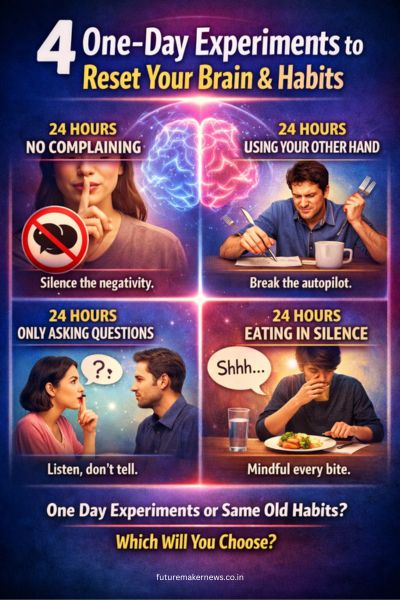
Illustration showing four one-day experiments to reset the brain and habits: no complaining, using the non-dominant hand, asking only questions, and eating in silence.

Can One Day Really Change Your Brain?

Brain- Most people assume habit change requires months of effort. Neuroscience suggests otherwise.
Short, intentional disruptions can activate neuroplasticity, interrupt autopilot behaviors, and increase self-awareness—even in just 24 hours.

These four one-day habit experiments are simple, uncomfortable, and surprisingly effective. Each targets a different mental loop: negativity, automatic behavior, poor listening, and mindless consumption.

1. Go 24 Hours Without Complaining

Complaining is one of the most ingrained mental habits. Studies in cognitive psychology show that repeated negative thought patterns strengthen neural pathways associated with stress and reactivity.

When you stop complaining for one day, you interrupt those loops.

Benefits:

  • Reduces mental noise
  • Improves emotional regulation
  • Increases awareness of negative self-talk

This process is sometimes referred to as neuroplastic silence—when the brain begins to loosen old patterns simply because they are no longer repeated.

2. Stop Using Your Dominant Hand for 24 Hours

Use your non-dominant hand to eat, write, brush your teeth, and perform daily tasks.

This simple disruption forces the brain out of automatic mode. Research on motor learning shows that unfamiliar movements activate new neural pathways and increase focus.

Benefits:

  • Breaks autopilot behavior
  • Improves attention and mindfulness
  • Stimulates neuroplasticity

The goal isn’t skill—it’s awareness.

2. Stop Using Your Dominant Hand for 24 Hours

Use your non-dominant hand to eat, write, brush your teeth, and perform daily tasks.

This simple disruption forces the brain out of automatic mode. Research on motor learning shows that unfamiliar movements activate new neural pathways and increase focus.

Benefits:

  • Breaks autopilot behavior
  • Improves attention and mindfulness
  • Stimulates neuroplasticity

The goal isn’t skill—it’s awareness.

4. Eat in Complete Silence for 24 Hours

  • No phone. No television. No conversation.

Eating without distractions reveals how often we consume food mindlessly. Mindful eating studies show that silence increases satiety awareness and improves self-control.

Benefits:

  • Resets relationship with food
  • Improves digestion awareness
  • Strengthens discipline through mindfulness

You don’t need a new diet. You need attention.

Why One-Day Experiments Work

A single day functions as a microcosm of long-term behavior. It exposes:

  • Automatic habits
  • Emotional triggers
  • Learned behaviors mistaken for identity

People who resist these experiments often believe habits are fixed. Those who try them treat habits as modifiable systems.

The difference isn’t willpower—it’s experimentation.

Final Thoughts: Are Your Habits Identity—or Experiments?

Some say, “One day can’t change anything.”
Others realize one day reveals everything.

You don’t need motivation to run an experiment.
You need curiosity.

So ask yourself:
Are you defending your habits—or testing them?

Comparison showing how wealthy individuals use advanced anti-aging technology and longevity science to slow visible aging

Rich- Scroll through photos of billionaires in their 50s and 60s.
Jeff Bezos. Elon Musk. Mark Zuckerberg.

They don’t look young-young — but they look unusually preserved.

Is it luck? Genetics? Filters?

Not exactly.

What’s really happening is more interesting — and more uncomfortable.

Aging Isn’t One Thing. It’s a Stack of Failing Systems.

Aging isn’t a single process. It’s a cascade:

  • DNA damage accumulates
  • Telomeres shorten
  • Mitochondria lose efficiency
  • Senescent (“zombie”) cells pile up
  • Cellular cleanup (autophagy) slows
  • Inflammation rises

By your mid-30s, biological decline becomes measurable, even if you feel fine.

This is where the wealthy diverge from everyone else.

Telomeres: The Cellular Clock Everyone Talks About (and Mostly Misunderstands)

Telomeres are protective caps on chromosomes.
They shorten with each cell division.

Yes, Elizabeth Blackburn won the 2009 Nobel Prize for discovering telomerase — the enzyme that can rebuild them.

No, there is no safe, proven telomerase injection that halts aging in humans.

Why?

Because telomerase also increases cancer risk. That’s why mainstream medicine is cautious — and why any clinic claiming dramatic telomere “resetting” is operating in experimental territory.

The rich don’t buy certainty.
They buy early access and managed risk.

What Ultra-Wealthy Longevity Clinics Actually Do

High-end longevity clinics (Switzerland, UAE, Singapore, California) don’t sell immortality. They sell optimization stacks:

  • Advanced diagnostics (epigenetic age clocks, continuous biomarker tracking)
  • Stem-cell–based regenerative therapies (still experimental)
  • Peptide protocols (BPC-157, thymosin variants, growth-hormone modulators)
  • Personalized gene-expression interventions
  • Aggressive inflammation control
  • Hormone optimization
  • Clinical-grade NAD+ infusions

Costs range from hundreds of thousands to millions — not because results are magical, but because monitoring, customization, and risk management are extreme.

The real advantage isn’t secret science.

It’s precision + consistency + early intervention.

NAD+, Mitochondria, and the Energy Decline You Feel After 30

Mitochondria are your cellular power plants.
As NAD+ levels decline with age, energy production drops.

This is why aging feels like:

  • Slower recovery
  • Brain fog
  • Reduced endurance
  • Loss of muscle resilience

Clinical NAD+ therapy exists, but its long-term impact on lifespan is still under study. Benefits are real for energy and metabolic health — but it’s not a youth elixir.

Still, this research matters — because it revealed something important.

The “Longevity Drugs” Doctors Won’t Prescribe (Yet)

Several compounds show lifespan extension in animals and improved aging markers in humans:

  • Rapamycin — extends lifespan in multiple species (but suppresses immunity)
  • Metformin — improves metabolic aging and reduces age-related disease risk
  • Senolytics — clear senescent cells (promising, early-stage)

Doctors hesitate not because they’re hiding something — but because medicine treats disease, not aging itself.

Aging isn’t classified as a condition.

So people experiment anyway.

The Legal, Boring, Less-Sexy Reality

Here’s the part no influencer wants to emphasize:

You can activate many of the same longevity pathways without injections, clinics, or elite access.

Not perfectly.
Not instantly.
But meaningfully.

Proven, Free Longevity Triggers

  • Intermittent fasting → boosts autophagy
  • High-intensity training → improves mitochondrial density
  • Cold exposure → increases stress resilience
  • Resistance training → preserves muscle and insulin sensitivity
  • Sleep discipline → regulates hormones and DNA repair

These aren’t trends. They’re biological switches.

The rich pay to flip them faster and with less discomfort.

Everyone else has to earn them.

Supplements: Helpful, Not Miraculous

Some compounds show promise:

  • Nicotinamide riboside (NR) → supports NAD+ production
  • Spermidine → associated with autophagy activation
  • Fisetin → potential senolytic effects

But supplements modulate, they don’t override biology.

No capsule replaces behavior.

The Real Divide Isn’t Money. It’s Agency.

The uncomfortable truth:

  • The elite aren’t immortal.
  • They’re just better managed.
  • They intervene earlier.
  • They track relentlessly.
  • They optimize consistently.

Most people don’t “age naturally.”
They age passively.

And passivity is expensive — just delayed.

So… Is Longevity the Future?

No.

It’s already here — unevenly distributed, imperfect, and still experimental.

You don’t need to live to 150 to win.

You need:

  • Strength at 70
  • Mental clarity at 80
  • Independence until the end

That outcome isn’t locked behind a Swiss clinic.

It’s locked behind discipline, literacy, and long-term thinking.

The rich buy time.

The disciplined build it.

“Seven glowing symbolic pillars representing psychological laws for gaining an unfair advantage.”

The rules people follow quietly — the ones that separate the ordinary from the unstoppable.

1. Kidlin’s Law — Clarity Solves Half the Problem

If you write a problem down clearly and specifically, you’ve already solved 50% of it.
Most people stay confused because they never define what they’re facing.

2. Pareto’s Law — 20% Creates 80% of Your Results

Success isn’t about doing everything.
It’s about finding the few actions that matter — and doing them relentlessly.

3. Murphy’s Law — Fear Becomes Reality

What you fear consistently, you unconsciously prepare for.
And what you prepare for, you invite.
Train your mind to expect better outcomes.

4. Wilson’s Law — Intelligence Compounds Faster Than Money

Shift your focus from income to information.
When you prioritize learning, money becomes the side-effect, not the goal.
(Follow smart creators. Surround yourself with intelligent thinking.)

5. Gilbert’s Law — The Result Is Your Responsibility

When you take on a task, it’s on you to find the most effective way to get it done.
Excuses don’t change outcomes. Efficiency does.

6. Falkland’s Law — Don’t Decide Unless You Must

Most decisions aren’t urgent.
If the answer doesn’t matter now, wait.
Time makes unclear choices clear.

7. Hick’s Law — More Choices = Slower Decisions

If decisions drain you, simplify your menu, your goals, your life.
Fewer choices = faster action = faster wins.

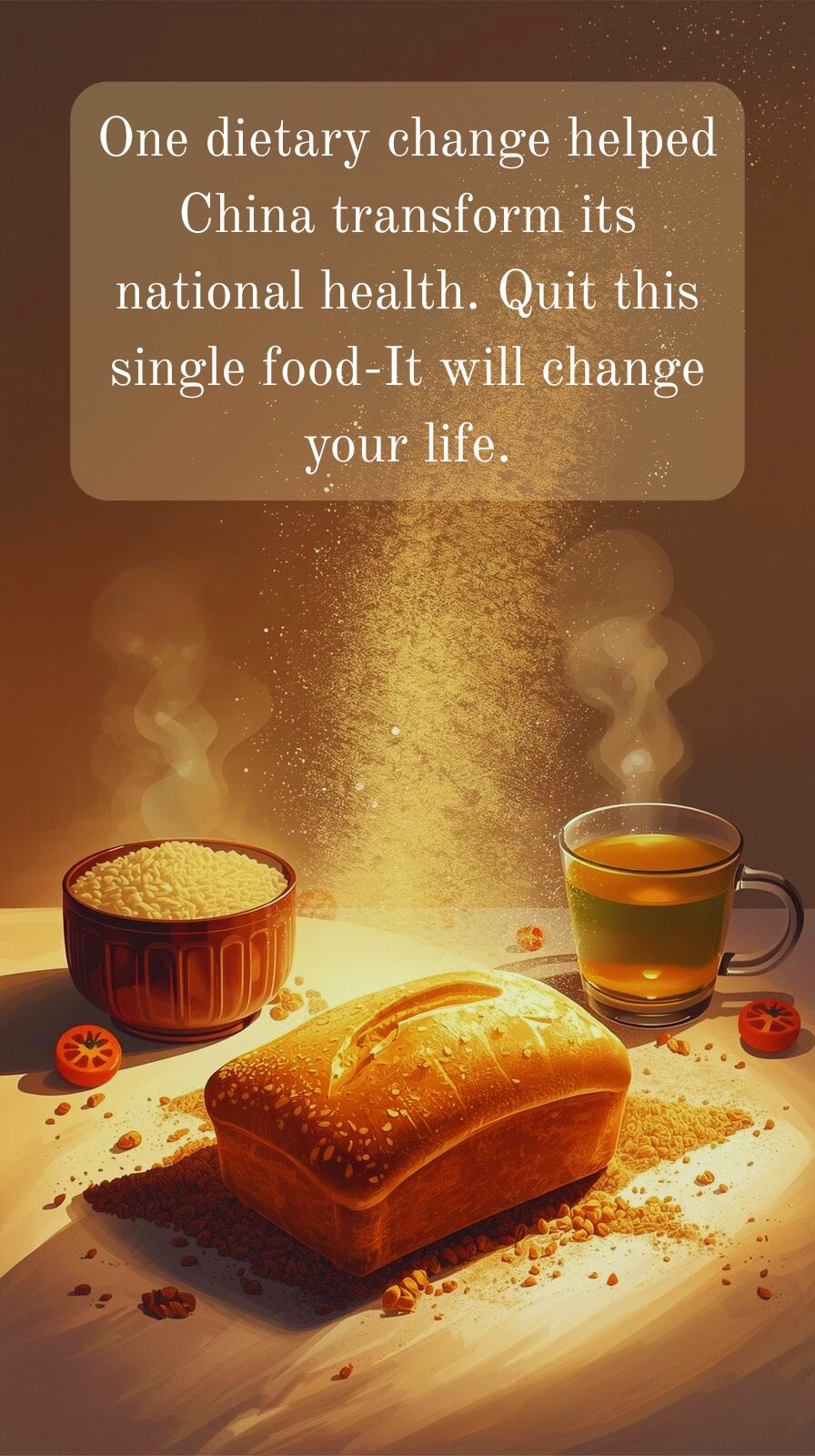
“Processed bread dissolving as healthier alternatives like rice, bone broth, and fermented vegetables take its place.”

1. The Pattern No One Talks About

Ever notice what tired, bloated, low-energy people have in common?
They all eat the same food — every single day.

China figured this out earlier than the West.
Quietly, they cut this food from their daily diet… and transformed their national health.

2. The Numbers That Shocked Researchers

In 1990, 9 out of 10 Chinese people ate this food every day.
By 2020 — only 1 in 10 did.

And during that shift:

  • Diabetes dropped by 340%
  • Obesity fell eightfold
  • Life expectancy rose by 12 years

Meanwhile, Europe and America quadrupled their consumption of the same product…
And saw the exact opposite:

  • More sickness
  • More fatigue
  • More chronic inflammation

3. The Hidden Truth: This Food Acts Like a Drug

This product hijacks the gut, spikes cravings, and blocks nutrient absorption.
It rewires the brain for constant hunger — not because you’re weak, but because it’s engineered that way.

China didn’t just remove it…
They replaced it with habits that repair the body from the inside out.

4. The 3 Foods China Used Instead

To rebuild national health, they leaned into:

Fermented vegetables (kimchi, sauerkraut, pickled radish)
Strengthens gut flora and digestion

Bone broth, several times a week
Repairs the gut lining, supports immunity

Green tea instead of coffee
Balances blood sugar and boosts antioxidant levels

The result?

  • Sugar cravings fade within one month
  • Excess weight melts off in three months
  • The body feels brand new within a year

5. So What’s the Culprit?

Bread.
Not the ancient kind — the modern version made from hybrid wheat.

It destroys gut health, inflames the body, and fuels chronic hunger.

China switched to rice.
We doubled down on bread.

And that’s the difference between a body that heals…
and a body that slowly breaks down.

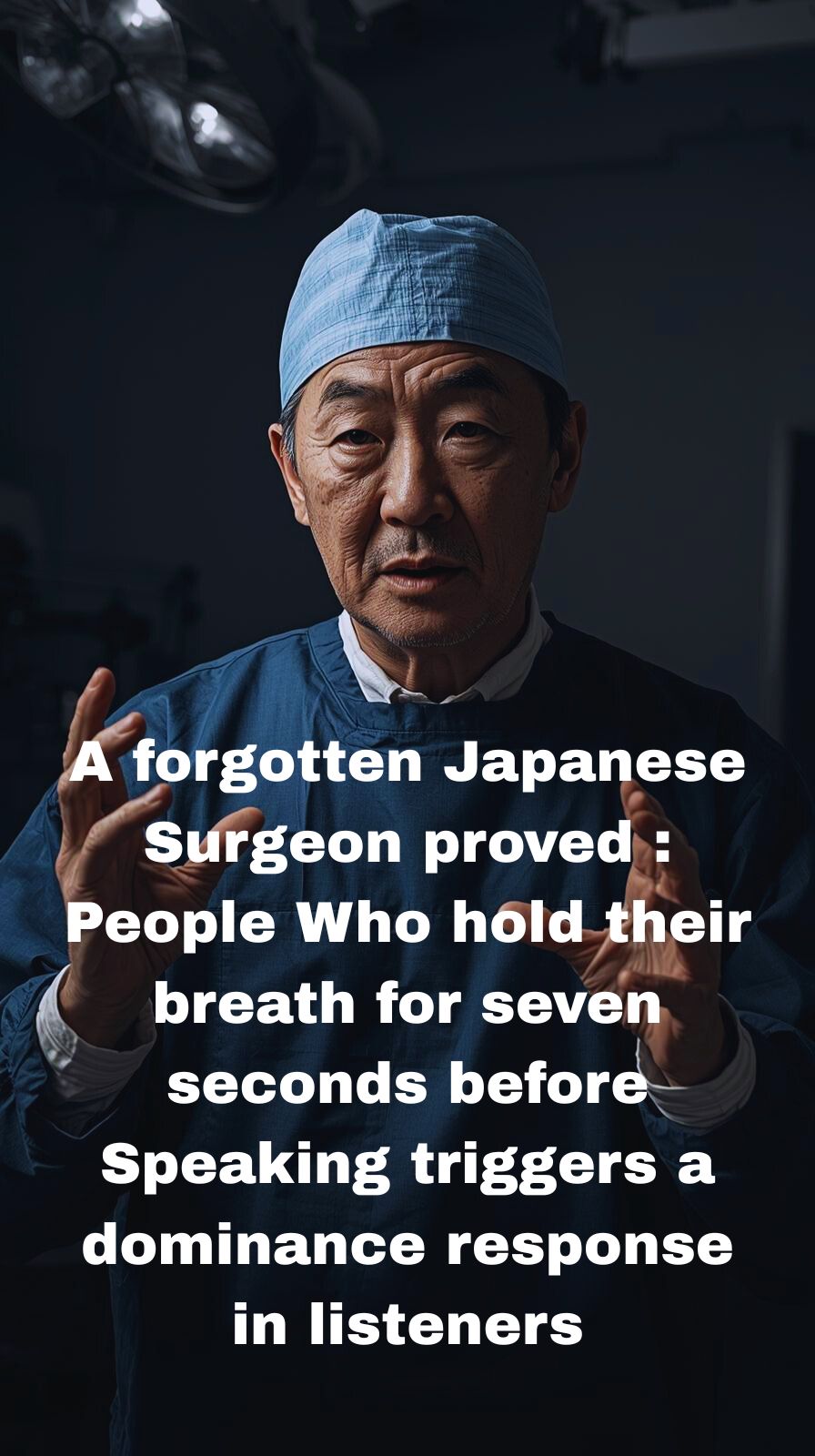
“1950s Japanese surgeon observing a patient practicing a breath-holding pause before speaking.”

Japanese Surgeon- In the 1950s, a surgeon in Tokyo made an observation that changed how he understood human communication forever.

He noticed something odd:
Some patients — quiet, soft-spoken, unthreatening — could calm or command an entire room without effort. Nurses slowed down around them. Other patients leaned in when they talked.

So he studied them.

What he found bordered on unbelievable.

1. Before speaking, they all stopped breathing — for about seven seconds.

He measured their vitals and saw the same pattern in patient after patient.
Right before speaking, they froze — breath held, eyes still, body quiet.

The room stilled with them.

The surgeon wrote:
“Silence radiated from them like an aura.”

2. The breath-hold activated a biological dominance response.

The seven-second pause raised CO₂ slightly, triggering the vagus nerve.
This slowed the heart rate, steadied posture, and produced the same micro-stillness predators show before striking.

Humans unconsciously recognize that stillness.

Listeners mirrored it.
Their eyes dropped.
Their bodies waited.

Dominance didn’t come from strength — it came from nervous-system timing.

3. The pause breaks the listener’s predictive loop.

The brain expects speech immediately after someone inhales.

But when the speech doesn’t come, the brain flips into heightened sensitivity.
Your auditory cortex “turns up the volume,” waiting for the next sound.

The first word you speak hits 3–4× stronger.

Power wasn’t in tone.
It was in controlled silence.

4. Modern communication training gets this completely wrong.

Coaches teach hand gestures.
Voice projection.
Confidence poses.

But the surgeon’s research showed that the body that controls the silence controls the room.

Tension held…
Then released…
Creates a natural hierarchy.

The pause is primal.
People respond to it without understanding why.

5. “A leader speaks after oxygen.”

That was the surgeon’s final written note.

Try it today:

  • Inhale gently.
  • Hold for seven seconds.
  • Stay absolutely still.
  • Then speak — slowly.

Watch what happens:
People lean in.
Their eyes lock on you.
The room falls into your rhythm.

Not because you’re louder…

But because their nervous systems already surrendered to your silence.

A couple holding hands during a wedding ceremony with warm, soft lighting.

1. The Whisper at the Wedding

During the vows, everyone waited for the same familiar promises:
love, forever, happiness.

But my uncle leaned toward me and whispered something I didn’t expect:

“The only couples who last are the ones who can say: ‘I forgive you.’”

It sounded unromantic… until he explained it.

2. Marriage Isn’t Tested by Love — It’s Tested by Resentment

In his 40 years of marriage, love wasn’t destroyed by big betrayals —
it faded from a thousand tiny grudges left unresolved.

Weddings are built on promises.
But marriages are built on repair.

3. The Forgiveness Threshold (What Therapists Know)

Long-term relationship studies show a consistent pattern:
Couples don’t fall apart because of conflict — they fall apart because of slow forgiveness.

  • Hold grudges → intimacy dissolves
  • Forgive fast → resilience deepens

Love isn’t endless passion.
Love is the ability to reset.

4. The Neuroscience of Why Forgiveness Works

When you forgive, your nervous system shifts out of attack mode.

Forgiveness lowers:

  • cortisol
  • adrenaline spikes
  • quiet-body “war mode”

Without it, the home stops feeling safe.
It becomes a battlefield — even in silence.

5. The Real Sentence That Keeps Couples Together

Most people think “I love you” is what keeps marriages alive.

But my uncle’s whisper was truer, harder, and more enduring:

Love starts with passion.
It survives only with forgiveness.

Person walking alone and gently talking to themselves, illustrating a science-backed habit that reduces stress and boosts immunity.

For two decades, Italian biologist Dr. Marco Villani studied individuals who almost never got sick — no chronic fatigue, no seasonal colds, no stress-induced burnout.
He expected perfect diets, elite genetics, or intensive exercise.

Instead, he found something bizarre:

They all talked to themselves out loud.
In public. At home. While driving. While walking.

Not madness — maintenance.

1. The Habit That Looks Strange but Heals the Body

Across every lifestyle — wealthy, poor, old, young — one pattern repeated:
People with exceptionally strong immunity verbalized their emotions.

A whisper.
A sentence.
A commentary spoken into the air.

Not to others — but to themselves.

2. The Biology Behind the “Self-Talk Effect”

When Dr. Villani wired volunteers to cortisol monitors and immune-response trackers, the results were shocking:

  • Cortisol dropped by 25–35% when people said their thoughts out loud
  • Heart rate stabilized within 30 seconds
  • Immune markers strengthened, especially natural killer cells
  • Stress trapped in silence caused cortisol spikes instead

He called it:

“Audible Digestion” — the mind’s way of processing emotional load.

Just like the stomach breaks down food, the brain must break down feelings — and vocalizing them turns on the vagus nerve, the switch for calm, clarity, and immunity.

3. Silence Makes You Sick

The people who got sick the most were not the unhealthy.

They were the restrained.

Professionals, parents, perfectionists — those who “held it together” quietly, who never voiced frustration, sadness, or overwhelm.
Their bodies mirrored their behavior:

“What you refuse to express, your immune system stops fighting.”
— Dr. Villani

4. Why Speaking Out Loud Works

When spoken aloud, even briefly, thoughts move from the emotional centers of the brain to the reasoning centers. This:

  • Prevents mental overload
  • Releases nervous-system tension
  • Shifts the body out of “fight-or-flight”
  • Signals safety to the immune system

You are not “talking to yourself.”
You’re discharging pressure.

5. Try This: The One-Sentence Method

When you feel tension rise, say one sentence out loud:

“I feel stressed because…”
or
“Right now I’m overwhelmed by…”
or
“My mind is tight — I need space.”

No solutions.
No analysis.
Just naming.

Most colds begin as unprocessed stress.
Health begins with expression.

Conclusion: Health Sounds Noisy

The people who stay well aren’t magical — they just don’t keep everything inside.

So if you feel the pressure building, don’t swallow it.
Don’t internalize it.
Don’t “stay calm” at the cost of your body.

Say it.
Out loud.

Because sometimes, the healthiest sound the body can make… is your own voice.

Parent and child practicing a Finnish bedtime ritual by reflecting on the best moment of the day in a cozy Scandinavian bedroom.

Across Finland, there’s a bedtime ritual so simple most people would overlook it — yet researchers found it can reduce adolescent anxiety by 60–80%.

It’s called the closing question.

1. The Scandinavian Ritual: “What Was the Last Good Moment Today?”

Every night, before bed, Finnish parents ask their child one thing:

“What was the last good moment today?”

  • No corrections.
  • No advice.
  • No screens.
  • Just one sentence spoken out loud.

This tiny act signals the brain: the day is ending safely.

2. The Science: Closure Lowers Lifelong Anxiety

A decade-long psychological study across Finnish families revealed something stunning:

Children who practiced the closing question showed 60–80% lower baseline anxiety by adolescence.

Not because they became blindly optimistic.
But because they learned emotional closure — the ability to end the day rather than mentally carry it into tomorrow.

3. Why It Works: The Brain Needs a “Day Ending” Signal

When a child names a positive moment before sleep:

  • Cortisol drops
  • The hippocampus tags the memory as safe
  • The nervous system learns:
    “The day can finish well.”

Without closure, the brain keeps spiraling — replaying stress, unfinished thoughts, and micro-anxieties long into the night.

4. Modern Kids Don’t Get Closure — They Go to Bed in Chaos

Blue light.
Doomscrolling.
Noise.
Comparison.
Overloaded dopamine.

Their brains never reach the “safety threshold.”
So they go to sleep wired, and wake up exhausted — as if the previous day never ended.

5. Finnish Parents Say It Best

One mother told researchers:

“We don’t put our children to sleep. We teach their minds to rest.”

Try it tonight.
No affirmations. No future talk.

Just:

“What was good today?”

It’s not gratitude.
It’s not therapy.
closure — the oldest human form of emotional safety.

5 things silently killing your peace and progress: negativity, approval-chasing, comfort addiction, comparison, and ignoring your health.

habits- Success isn’t just about what you do.
It’s equally about what you stop doing.

Here are 5 silent habits that quietly destroy your peace, growth, and potential — and what to avoid if you want to rise higher without burning out.

1. Negative People

Some people don’t just speak negatively — they project it.

Complainers, gossipers, and energy-drainers contaminate your mindset without you noticing.
Your environment is shaping you every day. Choose people who elevate your thinking, not those who bury it.

Protect your mental space like your future depends on it — because it does.

2. Living for Approval

When you live for applause, you die when it stops.

Seeking validation makes you disappear into who others want you to be.
You lose your authenticity trying to maintain an image that was never yours.

Choose alignment over approval.
Choose what feels right, not what looks right.

3. Comfort Addiction

Comfort feels safe — but it silently kills ambition.

If you stay where everything feels familiar, you’ll never discover how powerful you can become.
Growth starts the moment comfort ends: when you stretch, fail, learn, and rise again.

Comfort protects your present.
Discomfort builds your future.

4. Comparison

Comparison steals joy, confidence, and clarity.

Everyone has a different timeline, a different pace, a different path.
You can’t measure your story with someone else’s chapters.

Compare yourself only to who you were yesterday — that’s the only competition that matters.

5. Neglecting Your Health (Body & Mind)

Your body is your engine.
Your mind is your steering wheel.

Without sleep, movement, nutrition, and mental rest, every dream becomes harder, slower, and heavier.

Health is not a luxury — it’s the foundation for every goal you’ll ever chase.

The truth?

  • Your peace grows when you subtract.
  • Your success grows when you simplify.
  • Your future grows when you choose what (and who) you no longer allow into your life.