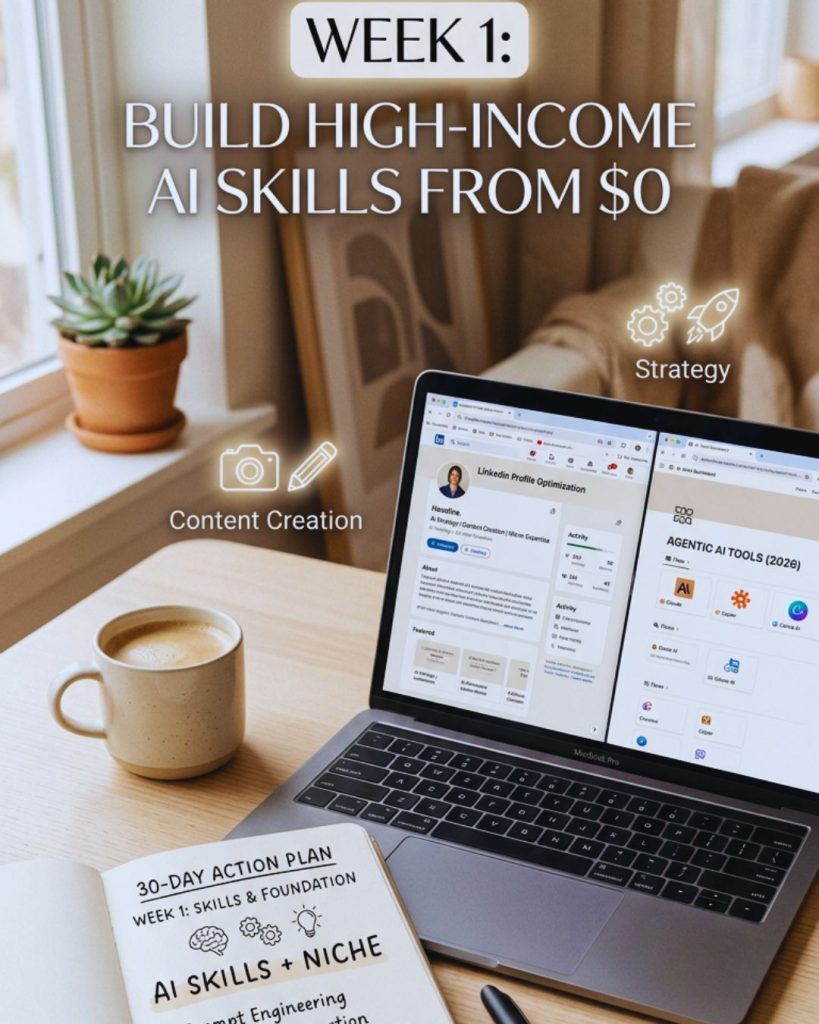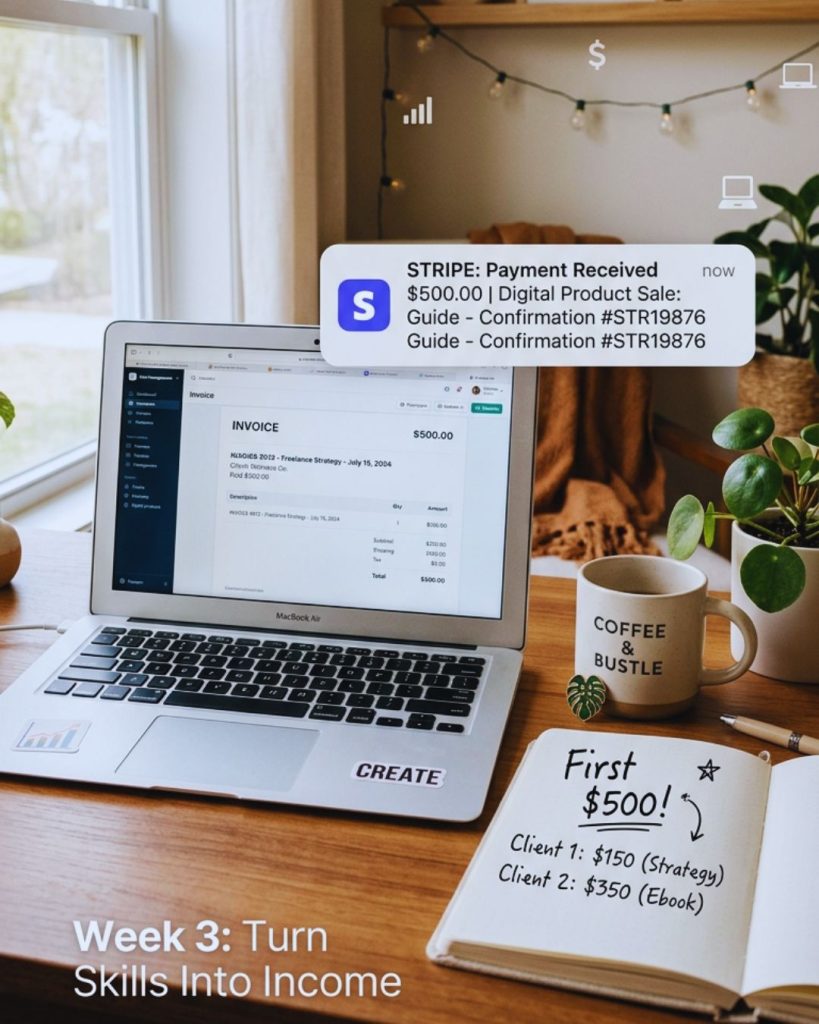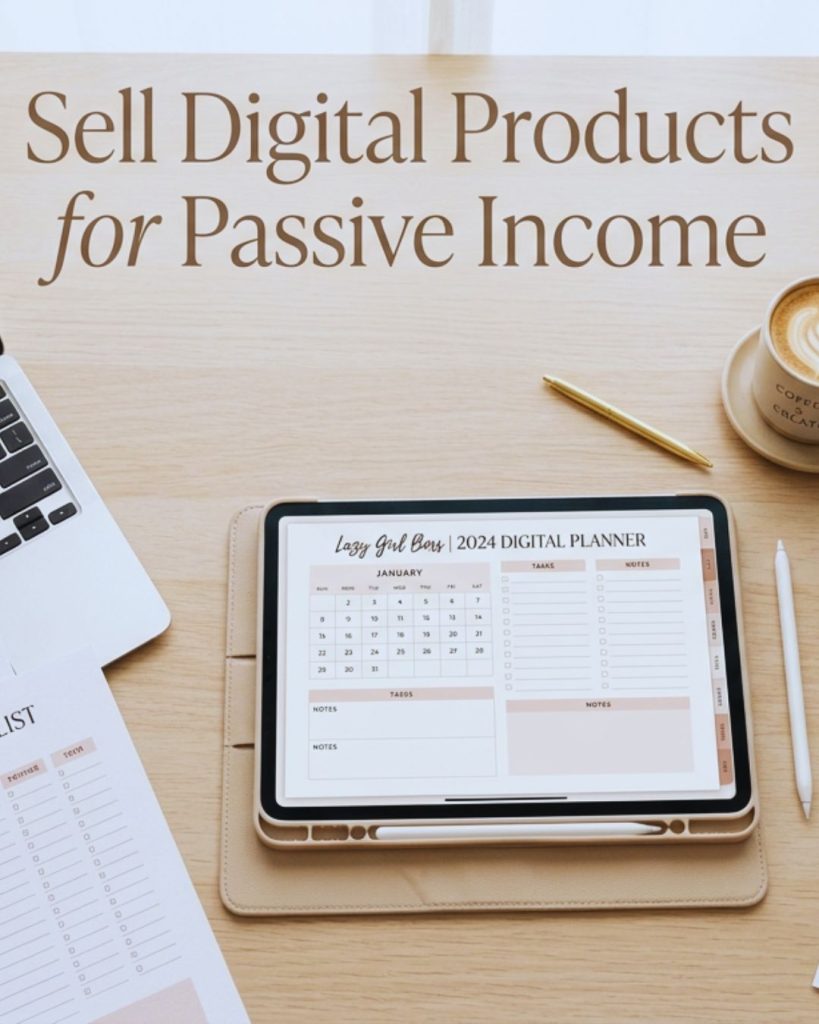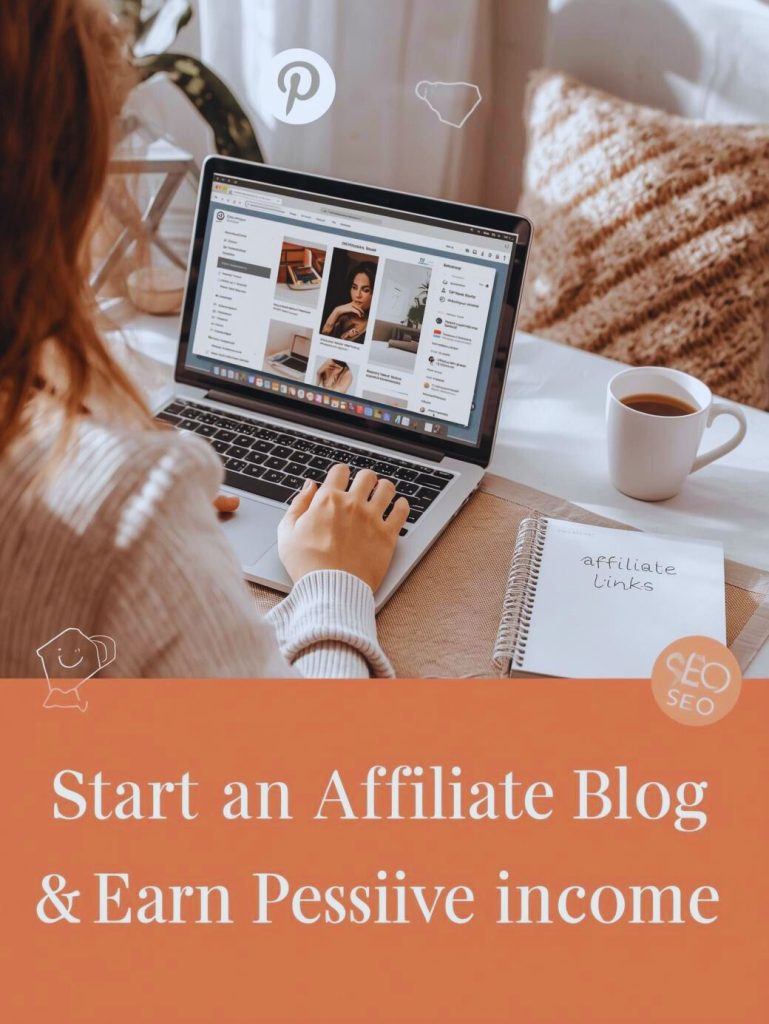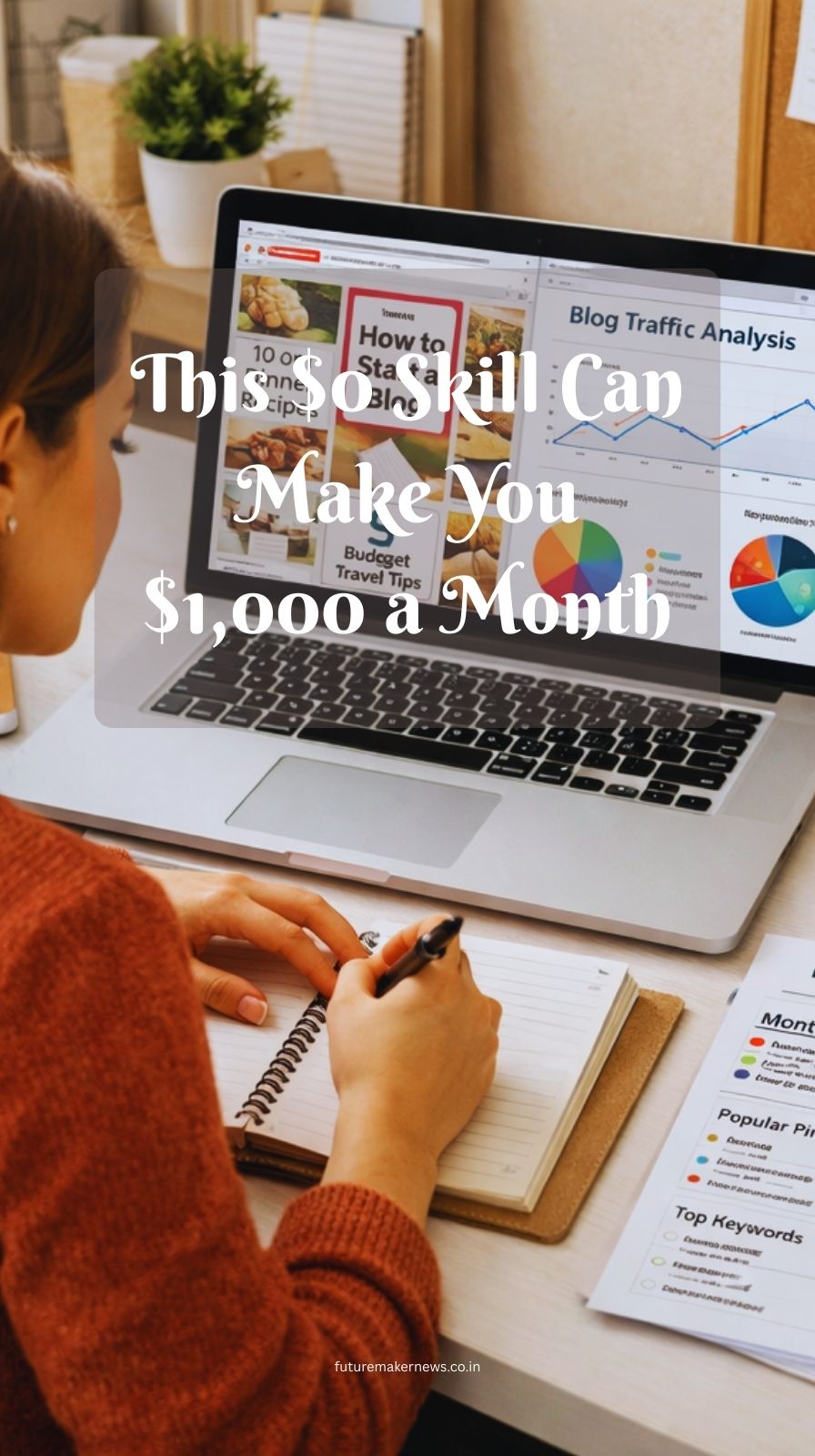
Content creator planning Pinterest SEO strategy and blog traffic growth using laptop and notes.

The internet is currently undergoing a massive shift. While everyone is distracted by the volatility of crypto or the complexity of coding, a quiet group of savvy creators is building consistent, monthly income using a skill that costs exactly zero dollars to start.

This isn’t about “get rich quick” schemes. It is about mastering the art of digital distribution through a combination of Pinterest SEO, magnetic headline writing, and strategic niche blogging. If you can connect a person’s problem with a solution through a simple image and a few lines of text, you have a license to print money in 2026.

The $0 Skill: Visual Search Arbitrage

The skill we are talking about is Visual Search Arbitrage. Unlike Facebook or Instagram, which are “social” networks, Pinterest is a visual search engine. People don’t go there to see what their friends are eating; they go there to plan their futures, buy products, and solve problems.

Why This Skill is a Goldmine

  • Zero Ad Spend: You don’t need a marketing budget to get millions of impressions.
  • Passive Traffic: A “Pin” you create today can continue to drive traffic and sales for years.
  • Low Competition: Most “bloggers” are fighting for scraps on Google, while the Pinterest SEO landscape remains a wide-open field of opportunity.

Part 1: Mastering Pinterest SEO Basics

Entrepreneur researching Pinterest SEO keywords to optimize pins and boards for traffic.
Pinterest works like a search engine—keywords determine whether your content gets discovered.

To make $1,000 a month, you must stop thinking like a social media user and start thinking like an SEO specialist. Pinterest SEO is the engine that drives your scalable digital model.

The Anatomy of a High-Ranking Pin

  • Keyword-Rich Titles: Your Pin title shouldn’t be “My Cute Office.” It should be “Modern Home Office Decor Ideas for Small Spaces 2026.”
  • Detailed Descriptions: Use the description to naturally weave in long-tail keywords. Tell the algorithm exactly who this content is for.
  • Board Authority: Organize your Pins into boards that are also optimized with SEO-friendly titles and descriptions.
  • Visual Cues: Pinterest’s AI “reads” your images. If you are blogging about “Vegan Recipes,” ensure your image clearly shows fresh vegetables and food.

The Power of Fresh Content

In 2026, the algorithm prioritizes “Fresh Pins.” This doesn’t mean you need a new blog post every day; it means you need a new visual asset for your existing content. This is where content batching becomes your best friend.

Part 2: The Art of Magnetic Headline Writing

Content creator brainstorming engaging headlines for blog and Pinterest content.
Your headline decides whether someone scrolls past or clicks.

You can have the best Pinterest SEO in the world, but if your headline writing is boring, no one will click. In the world of niche blogging, the headline is 80% of the sale.

The Psychology of the Click

  • The Curiosity Gap: “The One Tool I Used to Quit My 9-5” is better than “How to Freelance.”
  • Specific Numbers: “7 Ways to Save $500 This Month” outperforms “How to Save Money.”
  • Negative Interest: “Stop Doing These 3 Things If You Want to Lose Weight” triggers a psychological “fear of missing out” or “fear of making mistakes.”

Headlines for Pinterest Success

On Pinterest, your headline needs to be big, bold, and easy to read on a mobile screen. Use power words like “Ultimate,” “Secret,” “Free,” and “Transform” to grab attention in a crowded feed.

Part 3: Strategic Niche Blogging

Blogger researching niche topics and planning blog content strategy.
A focused niche attracts the right audience and increases conversions.

You have the traffic from Pinterest; now you need a place for that traffic to land. This is where niche blogging comes in. You don’t need to be a professional writer; you need to be a professional problem solver.

Choosing Your Million-Dollar Niche

Don’t go broad. “Health” is a crowded room. “Keto Meal Prep for Busy Nurses” is a private conversation. The more specific your niche, the higher your conversion rate.

  • High-Value Niches: Personal Finance, Home Decor, DIY Crafts, Tech Tutorials, and Professional Development.
  • Monetization Potential: Choose a niche where people are already spending money. If there are ads on the search results, there is money in the niche.

Structuring Content for Engagement

  • Small Paragraphs: No one reads walls of text on a phone. Keep it punchy.
  • Bullet Points: Make your content scannable.
  • Clear Call-to-Action (CTA): Every blog post should tell the reader what to do next—whether it’s signing up for a newsletter or clicking an affiliate link.

Part 4: The 4-Step System to $1,000/Month

Entrepreneur scheduling social media and Pinterest posts using automation tools and content calendar.

Automation and content batching allow your traffic system to run consistently.

Here is the exact blueprint to turn this $0 skill into a consistent income stream.

1. Set Up Your “Home Base”

Create a blog using a clean, fast-loading theme. Even if you are starting with a free platform, ensure your SEO-friendly structure is in place from day one.

2. The Content Batching Phase

Spend one day a week creating 10 high-quality blog posts. Use blogging AI to help you outline and draft, but add your personal “wit” and “voice” to keep readers engaged.

3. The Visual Factory

For each blog post, create 5-10 different Pins using free design tools. Change the headlines, the colors, and the images. This allows you to “test” which visual triggers work best for your audience.

4. Automated Scaling

Use automation tools to schedule your Pins to go out at peak times. You shouldn’t be manually pinning all day. Set the system up once and let it run.

The Secret Ingredient: Topical Authority

To truly dominate Pinterest SEO, you need to become a “Topical Authority.” This means you don’t just write one post about “Budget Travel”; you write 50 posts covering every possible angle of it.

  • Interlinking: Link your blog posts to each other. This keeps readers on your site longer, which pleases both Google and Pinterest.
  • The Snowball Effect: As your authority grows, your Pins will rank higher, your blog will rank higher, and your income will scale from $100 to $1,000 and beyond.

Why Most People Fail (And How You Won’t)

The reason people fail at niche blogging isn’t a lack of talent; it’s a lack of consistency.

  • The “Dip”: You might see zero results for the first 30 days. This is the filter that weeds out the weak.
  • The Pivot: If a certain type of Pin is getting thousands of views, stop what you’re doing and make 10 more just like it.
  • The Value Add: Always ask, “Is this line helping the reader?” If the answer is no, delete it.

Scaling Beyond $1,000

Once you hit the $1,000 mark through ad revenue and affiliate marketing, you have a proven scaling system. At this point, you can:

  • Hire a virtual assistant to handle the pinning.
  • Launch your own digital product (an e-book or printable).
  • Start a second blog in a completely different niche using the same Pinterest SEO blueprint.

Final Thoughts: The Cost of Inaction

In 2026, the “middle class” of the internet is being built by people who master content systems. You don’t need a degree, you don’t need a boss, and you don’t need money to start. You just need to master the $0 skill of driving traffic through visual search.

The world is searching for answers. Your only job is to provide them in a way that is beautiful, searchable, and easy to consume. Start your niche blogging journey today, and by this time next month, you could be looking at your first $1,000.

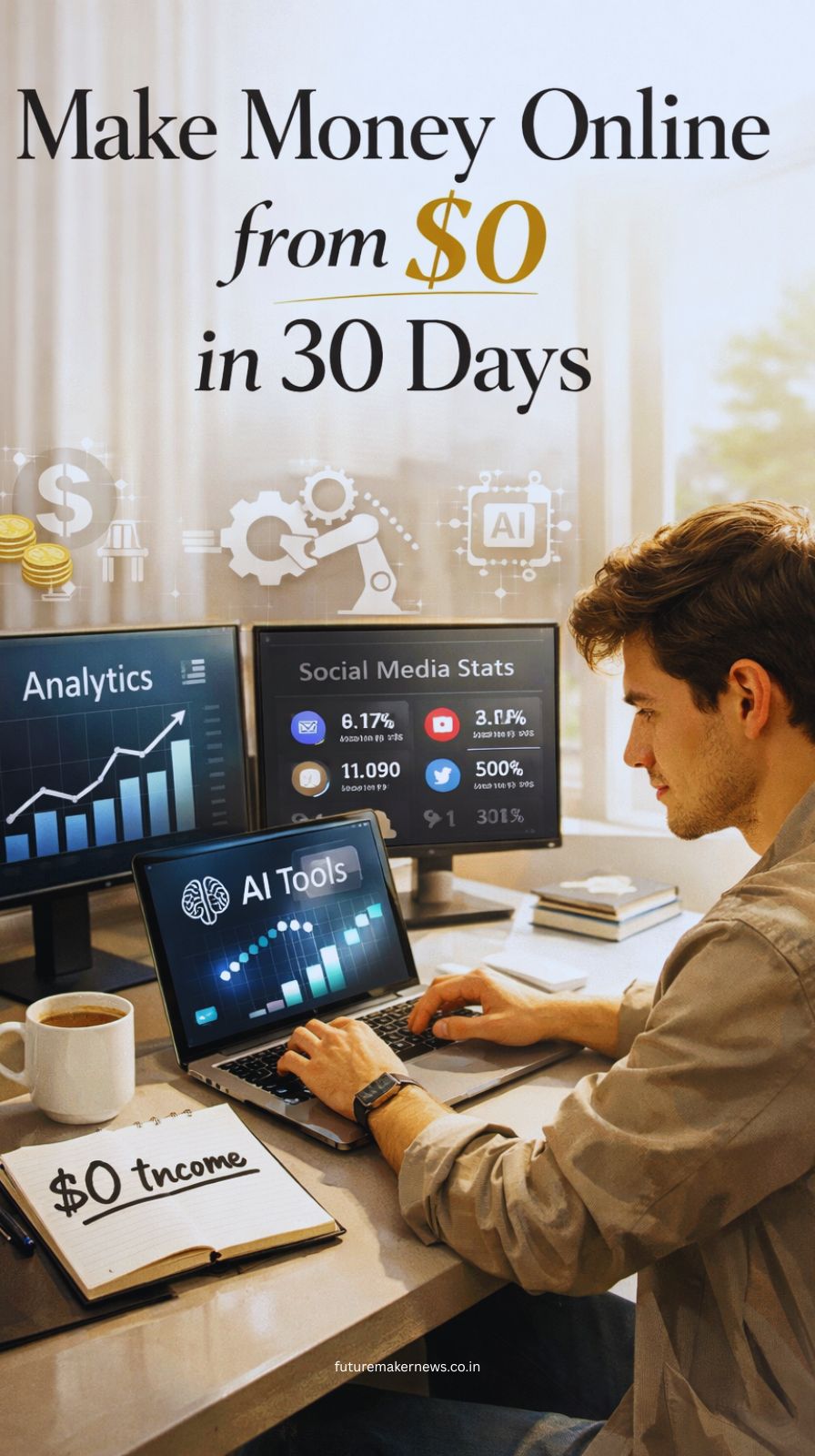
Entrepreneur starting an online business with laptop and free digital tools representing making money online with no investment.

AI – Being broke is not a permanent state; it is often a lack of access to the right scaling systems. In the digital economy of 2026, the barrier to entry has officially hit zero. You no longer need “seed money” or a venture capitalist to back your ideas. If you have a smartphone, an internet connection, and the discipline to execute, you have everything required to build a profitable online business.

This guide is a “zero-to-one” manual. We are stripping away the fluff and focusing on a zero investment plan that utilizes free AI tools and automation workflows to generate income from thin air. If your bank account is at zero, your greatest asset is your time—and we are going to show you how to invest it with mathematical precision.

The Psychology of the Zero-Dollar Start

Most people never start because they believe they need a “professional” setup. They want the paid software, the expensive microphone, and the premium hosting. This is a form of procrastination. The “quietly rich” started with free tools and only upgraded once the business paid for the tools.

The Rules of the Zero-Investment Model

  • Sweat Equity First: You replace capital with manual research and content batching.
  • Leverage Free Platforms: Use high-traffic “rented” land (like TikTok, Medium, or YouTube) to build your initial audience.
  • Reinvest Everything: The first $100 you make shouldn’t go to a steak dinner; it should go into a domain name or a basic automation tool.

Phase 1: The High-Demand “Skill Arbitrage”

Entrepreneur using AI writing tool to improve business content for clients.
Solve business problems using AI and get paid for the solution.

If you are broke, you need cash flow fast. The quickest way to get it is service arbitrage. This involves finding a business problem and using a free AI tool to solve it better and faster than a human could five years ago.

Step 1: Identify the “Pain Points”

Local businesses and creators are drowning in the need for content. They need SEO-optimized descriptions, social media captions, and video scripts.

  • The Opportunity: Offer “Content Refresh” packages.
  • The Tool: Use the free tiers of blogging AI or large language models to generate high-quality drafts in seconds.

Step 2: The “Outreach” Machine

Don’t wait for clients to find you on saturated gig sites.

  • Use Google Maps to find local businesses with poor descriptions.
  • Rewrite one for them for free as a “gift.”
  • Send it via email with a note: “I noticed your profile could use an SEO boost. I did this for you; if you like it, I can do your whole catalog.”

Phase 2: Building Your “Digital Real Estate” (Free)

Laptop showing blog publishing platform representing building digital assets online.
Your digital assets can work for you 24/7.

Once you have a tiny bit of breathing room, you must stop trading hours for dollars and start building digital assets. This is where passive income begins.

Creating a Content Factory

You don’t need a paid website to start a blog. Platforms like Medium, Substack, and LinkedIn Articles have massive built-in audiences and cost $0 to use.

  • Topical Authority: Choose one niche (e.g., “AI tools for accountants” or “Sustainable gardening tips”).
  • SEO Strategy: Use free keyword research tools to find long-tail keywords that have low competition but high intent.
  • The 30-Day Blitz: Commit to a content batching schedule where you produce 30 articles in 5 days. Use AI writing assistants to structure your thoughts and ensure your posts are SEO-friendly.

Phase 3: The Power of Content Batching & Repurposing

Content creator planning social media and blog posts using batching strategy.
One idea can create content for an entire week.

The biggest mistake “broke” entrepreneurs make is working too hard on one platform. To scale, you must be everywhere at once without spending a dime.

The “One-to-Many” Workflow

  1. The Anchor: Write one high-value, SEO-optimized blog post on a free platform.
  2. The Chop: Use free AI tools to break that post into 5 Twitter (X) threads, 3 LinkedIn posts, and 10 “hooks” for short-form video.
  3. The Visuals: Use free graphic design platforms (like Canva’s free tier) to create templates.
  4. The Distribution: Spend two hours on a Sunday content batching your social media for the entire week.

By doing this, you aren’t just a “blogger”; you are a multi-channel media brand. This increases your surface area for luck and income.

Phase 4: Monetization Without a Product

Affiliate marketing dashboard showing earnings growth from digital content.
A product to start making money online.

You don’t need to manufacture a product to make money. You can monetize other people’s hard work through affiliate marketing and lead generation.

Zero-Cost Monetization Models

  • Curated Affiliate Lists: Create “Top 10” lists for free software or tools that offer affiliate programs. When someone signs up through your SEO-friendly review, you get a commission.
  • Digital Lead Gen: Find a service provider (like a web designer). Tell them you will send them leads for a 20% cut. Use your free content to attract people looking for that service.
  • Ad Revenue: Platforms like YouTube and Medium pay you directly once you reach their “partner” milestones. This is the ultimate scalable digital model.

Phase 5: Implementing Automation Tools (Free Tiers)

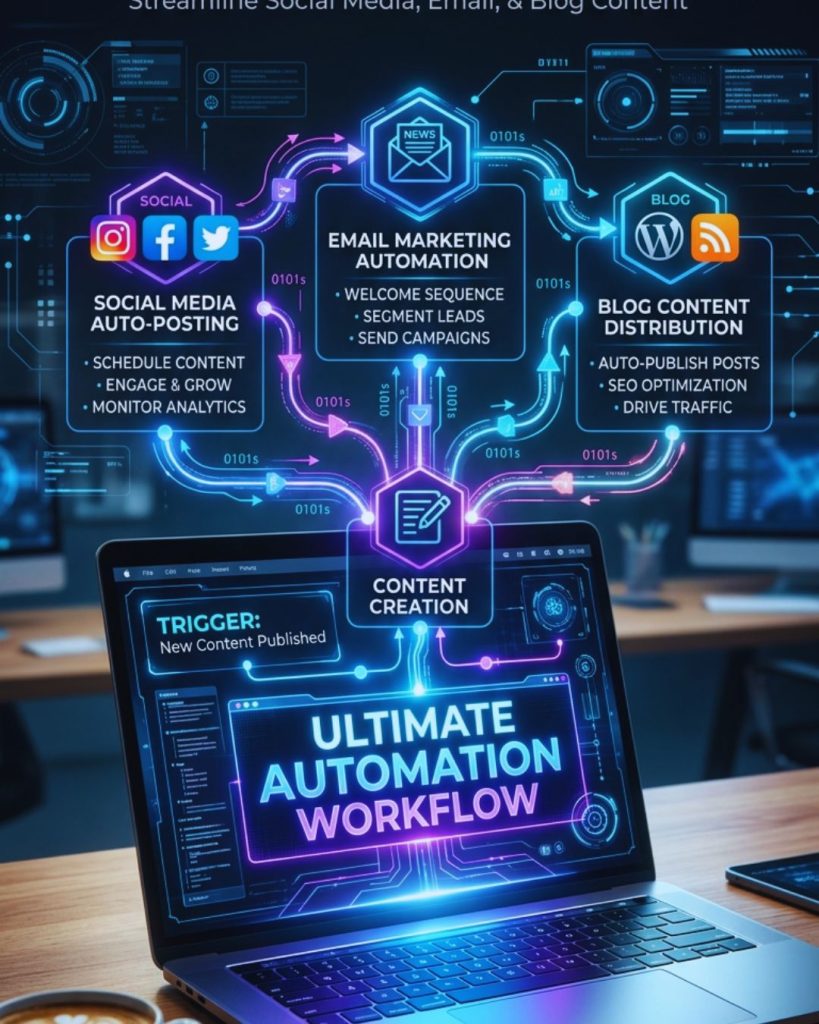
Digital automation workflow connecting content platforms to grow online business.
Automation turns small efforts into scalable income.

As your “side hustle” grows, you will run out of time. This is the danger zone where most people quit. The solution is automation tools that have generous free tiers (like Zapier, Make, or IFTTT).

What to Automate First

  • Social Posting: Auto-post your blog links to your social channels.
  • Lead Capture: Use free Google Forms to collect email addresses of people interested in your content.
  • Email Marketing: Use the free tier of email providers to send a weekly newsletter to your growing list.

“Automation is the ’employee’ that never sleeps, never complains, and works for $0 a month until you’re ready to scale.”

The “Broke-to-Boss” 90-Day Roadmap

If you started today with $0, here is exactly what your schedule should look like:

  1. Days 1-15: The Research Phase
  1. Find your niche.
  2. Identify 50 high-intent keywords.
  3. Set up your free profiles on Medium, TikTok, and Twitter.
  4. Study successful scalable digital models in your space.
  • Days 16-45: The Content Explosion
  1. Engage in aggressive content batching. Aim for 2 posts per day.
  2. Use AI tools to maintain quality while increasing quantity.
  3. Focus on providing “insane value”—solve problems for free to build trust.
  • Days 46-75: The Outreach & Networking Phase
  1. Reach out to 10 potential “referral partners” or clients per day.
  2. Comment on 20 “big” accounts in your niche to steal their “eyeballs” and redirect them to your profile.
  3. Start your free newsletter to “own” your audience.

Days 76-90: The Monetization Pivot

  • Insert your affiliate links into your highest-performing posts.
  • Offer a “Premium” version of your service or a small digital download (created for free using AI).
  • Analyze your data to see which scaling systems are working and double down.

Common Pitfalls to Avoid When You’re Broke

When you have no money, your “time-to-money” ratio is everything. Don’t fall into these traps:

  • Over-Designing: Your logo doesn’t matter. Your font doesn’t matter. Your value proposition does.
  • The “One More Video” Trap: Stop watching “how-to” videos and start doing the “how-to.”
  • Buying Courses: Everything you need to know is available for free in the documentation of AI tools and on YouTube. Don’t spend your last $50 on a “guru” course.

The Future is Yours to Build

The gap between “broke” and “financially free” is no longer a mountain of cash—it is a mountain of content and systems. By using blogging AI, automation tools, and a rigorous content batching schedule, you are building a machine that eventually detaches your income from your time.

The “quiet wealth” being created right now is built on the backs of these free technologies. In 2026, the only thing standing between you and a $10k/month business is the willingness to learn the scaling systems and put in the “boring” work of daily execution.

The tools are free. The information is free. The platforms are free. The only thing that isn’t free is the effort.

Digital entrepreneur working on laptop with analytics and automation tools representing scalable online income systems.

The dream of financial freedom has never been more accessible, yet millions of aspiring entrepreneurs are currently trapped in a cycle of “busy work” that leads nowhere. We are living in a transition period where traditional side hustles are becoming obsolete, replaced by high-leverage scalable digital models.

If you find yourself trading every hour of your life for a few measly dollars, you aren’t building a business—you’ve just bought yourself a second, lower-paying job. In this deep dive, we are going to expose the oversaturated gigs that are draining your energy and reveal the automated systems that are actually making people wealthy in 2026.

The Trap of the Linear Income Model

Most people start their journey by looking for “easy” work. This is the first mistake. Easy work attracts the most competition, which drives down the price of labor. This creates a “race to the bottom” where you are competing with millions of others for the same five-dollar task.

Why Linear Hustles Fail

  • No Compounding Interest: When you stop working, the money stops flowing. There is no residual value in the work you did yesterday.
  • Capped Upside: There are only 24 hours in a day. Even if you are the best at a manual task, your income has a hard ceiling.
  • High Burnout Rate: Modern gig economy platforms are designed to optimize for the consumer, not the provider, leading to exhausted workers and thin margins.

Part 1: The Hall of Shame – Oversaturated Gigs to Avoid

Before we talk about how to make the big money, we have to stop the bleeding. These are the “trap” hustles that are currently flooded with more supply than demand.

1. General Freelance Writing & Data Entry

With the explosion of generative AI, the market for basic blog posts, product descriptions, and data entry has collapsed. If a machine can do it in three seconds for less than a penny, you cannot charge a living wage for it.

  • The Reality: Platforms like Upwork and Fiverr are saturated with “low-value” writers competing for $0.01 per word.
  • The Verdict: Unless you are a highly specialized technical writer, avoid general content mills.

2. Rideshare Driving & Food Delivery

While great for a quick $50 in an emergency, these are not wealth-building systems. Between gas prices, vehicle depreciation, and insurance, most drivers are effectively “cashing out” the equity in their car rather than making a profit.

  • The Reality: You are at the mercy of an algorithm that can change your pay rate instantly.
  • The Verdict: This is a survival tactic, not a business strategy.

3. Basic Dropshipping (The Old Way)

The “AliExpress to Shopify” model is largely dead. Shipping times are too long, margins are too thin, and customers are too smart. Without a unique brand or proprietary product, you are just a middleman that nobody asked for.

  • The Reality: Ad costs on Meta and TikTok have skyrocketed, making it nearly impossible to turn a profit on cheap trinkets.
  • The Verdict: Only enter e-commerce if you are building a private label brand.

Part 2: The Shift to Scalable Digital Models

The secret to true wealth is asymmetric upside. This means you put in a set amount of work once, and it has the potential to pay you back a thousand times over. This is the core of digital leverage.

The Logic of Digital Assets

Digital assets (code, content, and media) are the new “real estate.” They don’t require maintenance, they don’t decay, and they can be replicated infinitely at zero cost.

The Winner’s Circle: High-Leverage Models

If you want to stop wasting time, you need to pivot your energy toward these four scalable systems.

1. AI-Driven Content Ecosystems

AI writing software generating blog content with SEO optimization dashboard.
One AI-powered blog can create thousands of visitors.

Instead of writing one article at a time, use blogging AI and content batching to build a topical authority site. By leveraging automation tools, you can manage a network of sites that capture niche search traffic and monetize via high-tier ad networks.

  • Why it works: You are building a “search engine moat” that generates passive income 24/7.
  • The Strategy: Focus on SEO-optimized long-tail keywords that solve specific problems for high-spending audiences.

2. Specialized “Productized” Services

Digital service packages displayed on laptop representing productized services.
Stop selling hours. Start selling systems.

If you have a skill (like video editing or lead generation), don’t sell it by the hour. Sell it as a package.

  • Example: Instead of “I will edit your video for $50,” offer “The YouTube Growth Package: 4 SEO-optimized videos per month for $1,000.”
  • Why it works: It allows you to create standard operating procedures (SOPs) and eventually hire others to do the work, making you the owner rather than the worker.

3. Digital Community & Paid Newsletters

Email newsletter platform dashboard showing subscriber growth.
1,000 loyal subscribers can build a six-figure business.

In an age of AI-generated noise, human curation is becoming incredibly valuable. People are willing to pay for a filtered, high-quality stream of information.

  • Why it works: It’s a subscription revenue model. Once you reach 1,000 “true fans” paying $10/month, you have a six-figure business with almost no overhead.
  • The Strategy: Use platforms like Substack or Beehiiv to own your audience data.

4. SaaS and No-Code Micro-Apps

No-code software builder interface for creating micro SaaS apps.
You don’t need to code to build a profitable app.

You no longer need to be a software engineer to build a tech company. With no-code tools, you can build simple apps that solve a specific problem (like a custom calculator for real estate agents).

  • Why it works: Software has the highest profit margins in the world. You build it once, and scaling systems handle the rest.

How to Execute: The 3-Step Scaling Framework

To move from an oversaturated gig to a scalable digital model, you must follow a disciplined framework.

Step 1: Identify the High-Value Problem

Wealth is directly proportional to the size of the problem you solve. Don’t look for “gigs”; look for “pain points.”

  • Small Problem: “I need someone to post on my Instagram.” (Low pay)
  • Big Problem: “I need a system that generates 20 qualified sales leads a month using short-form video.” (High pay)

Step 2: Build the Automated Workflow

Once you find a solution, automate the repetitive parts. Use automation tools to handle the data scraping, the lead sorting, and the initial outreach. Your goal is to spend 80% of your time on strategy and creativity and only 20% on execution.

Step 3: Content Batching for Authority

Whether you are selling a service or a product, you need to be seen as an expert. Dedicate one day a week to content batching. Create 30 days of social media posts, videos, and articles in one sitting. This builds your “digital footprint” while you focus on the core business.

Why “Passive Income” is a Misnomer

The internet loves the term passive income, but it’s often misunderstood. No income is passive at the start. It is front-loaded income.

  • You work 100 hours for $0 today.
  • So you can work 0 hours for $1,000 tomorrow.

The oversaturated gigs we discussed earlier are the opposite: they pay you $20 today, but they will never pay you more than $20 tomorrow, no matter how much you work.

The Mindset Shift: From Worker to Architect

The people making “quiet wealth” don’t view themselves as workers. They are systems architects. They look at the digital landscape and ask: “How can I connect these AI tools and automation workflows to create a machine that works for me?”

Questions to Ask Yourself:

  1. Is my work replicable? Can a machine or a $5/hour assistant do this? If yes, you are in danger.
  2. Is my income capped? If I work twice as hard, do I make twice as much, or is there a limit?
  3. Am I building an asset? If I walked away for a month, would I still have a business when I came back?

The Road Ahead in 2026

The barrier to entry for digital business has dropped to zero. This is both a blessing and a curse. It means competition is higher than ever, but it also means the tools to win are more powerful than ever.

Stop competing for scraps in the gig economy. Stop looking for “side hustles” that only pay for your groceries. Start looking for scalable digital models that pay for your freedom.

By focusing on content batching, SEO-friendly strategies, and automation tools, you are not just making money—you are building an empire that exists independent of your time. The “quietly rich” are simply those who realized that the most valuable thing you can own is a system that works when you don’t.

Modern workspace with laptop showing AI writing tools and SEO analytics representing automated blogging and content creation strategy.

Many thought blogging was dead, but AI writing assistants have revitalized the industry. The secret isn’t just “writing more”; it’s about SEO-driven content that captures high-intent traffic.

Revolutionizing the Written Word

Modern blogging AI doesn’t just generate text; it analyzes the top-ranking results on Google and structures your content to beat them. By using Natural Language Processing (NLP), these tools ensure your articles satisfy both human readers and search engine algorithms.

  • Keyword Optimization: AI identifies the long-tail keywords your competitors are missing.
  • Semantic Search: Tools now understand the “intent” behind a search, allowing you to rank for topics, not just phrases.
  • Infinite Ideas: Gone are the days of writer’s block. AI can generate months’ worth of content pillars in seconds.

Content Batching: The Secret to Consistency

The biggest reason most people fail at digital business is inconsistency. Content batching is the process of producing a large volume of work in a single sitting, and AI has turned this process into a superpower.

How to Batch Like a Pro

  1. Ideation Phase: Use AI to generate 50-100 blogging topics based on current market trends and competitor analysis.
  2. Drafting Phase: Utilize AI writing tools to create high-quality outlines and first drafts for all 50 topics simultaneously.
  3. Refinement Phase: Spend your time “humanizing” the AI output—adding personal anecdotes, unique insights, and your brand voice.
  4. Distribution: Use automated scheduling to drip-feed this content over the next three months.

By spending one weekend on content batching, you effectively buy yourself 90 days of freedom while your brand grows.

Automation Tools: The Engine of Growth

If content is the fuel, automation tools are the engine. The people getting “quietly rich” are those who have connected their AI tools into a seamless pipeline. This is often referred to as no-code automation.

Essential Components of an Automated Empire

  • Workflow Integrators: Tools like Zapier or Make.com act as the “glue,” connecting your AI writer to your WordPress site and your social media accounts.
  • Social Media Automation: Tools that take a single blog post and automatically chop it into 10 tweets, 5 LinkedIn posts, and an Instagram carousel.
  • AI Video Generators: Transforming text-based blogs into video content for YouTube and TikTok without ever showing your face.

“The goal of automation isn’t to replace the human; it’s to remove the mundane so the human can focus on high-level strategy and creativity.”

Scaling Systems: Turning Content into Cash

Generating traffic is only half the battle. To get rich, you need scaling systems that convert that traffic into revenue. This is where the integration of AI marketing becomes critical.

Revenue Streams for AI-Powered Blogs

  • Programmatic Advertising: High-volume traffic fueled by batch-produced SEO content leads to massive ad payouts from platforms like Mediavine or AdThrive.
  • Affiliate Marketing at Scale: AI can scan your existing content to find opportunities to insert relevant affiliate links, ensuring no monetization opportunity is missed.
  • Digital Products: Use AI to help draft e-books, create course outlines, or even write the code for simple SaaS (Software as a Service) tools.

SEO Optimization: Outsmarting the Algorithm

You cannot build wealth if no one finds your content. SEO-friendly strategies are the backbone of any successful AI venture.

Advanced SEO Tactics with AI

  • Internal Linking: AI tools can analyze your entire site architecture and automatically suggest internal links to boost your domain authority.
  • User Intent Analysis: Modern AI tools can tell you if a user wants a “how-to” guide or a “product review,” allowing you to tailor your content perfectly.
  • Real-time Updates: Google loves fresh content. Use AI to periodically scan your old posts and update them with new statistics or current trends, keeping your rankings high.

The “Quiet” Wealth Strategy: Step-by-Step

If you wanted to start today, here is the blueprint that many successful “AI entrepreneurs” are following:

Phase 1: Niche Selection

Entrepreneur researching SEO keywords and niche ideas on laptop to find profitable micro-niches.
Success starts with choosing a profitable niche.

Don’t go broad. Use AI to find “micro-niches” with high commercial intent but low competition. Instead of “Fitness,” think “AI-powered home gym setups for busy executives.”

Phase 2: Building the Infrastructure

Laptop displaying website dashboard while blogger sets up digital infrastructure for content publishing.
Build a system where ideas turn into published content.

Set up a clean, fast-loading website. Connect your blogging AI to a project management tool. Create a “content factory” where ideas go in and SEO-optimized articles come out.

Phase 3: The Content Blitz

Consistency beats inspiration every time.
Blogger planning multiple blog posts and content calendar for SEO content batching.

Execute a content batching strategy. Aim for 30-50 high-quality posts in your first month. This signals to search engines that you are a topical authority.

Phase 4: Automating Distribution

Social media scheduling dashboard automating distribution of blog content across platforms.
One article should work for you on every platform.

Set up automation tools to repurpose every blog post. A single article should live four different lives across Twitter, LinkedIn, Pinterest, and YouTube.

Phase 5: Analyze and Pivot

Data shows you where the real opportunities are.
Entrepreneur reviewing SEO analytics and website traffic reports to optimize blog strategy.

Use AI analytics to see what is working. Double down on the topics that are getting traction and prune the ones that aren’t. This is where scaling systems truly take over.

Overcoming the “AI Quality” Myth

A common critique is that “AI content is junk.” The people getting rich know this is a half-truth. The winners are those who use AI as a co-pilot, not a substitute.

High-Value Content Pillars

  • Original Research: Use AI to synthesize data, but draw your own unique conclusions.
  • Expert Tone: Use AI to polish your grammar, but keep your “voice” authentic and relatable.
  • Visual Appeal: Use AI image generators to create custom, stunning visuals that keep readers on the page longer.

The Future of AI and Personal Wealth

The window of opportunity for “quietly” making money with AI is wide open, but it won’t stay this way forever. As more people adopt these automation tools, the barrier to entry will rise. The advantage goes to the early adopters who build their scaling systems now.

The difference between those who struggle and those who thrive in the next decade will be their ability to manage AI workflows. It’s not about how hard you work; it’s about how much work you can delegate to your digital workforce.

Final Thoughts for the Aspiring Entrepreneur

The tools are available. The cost of entry is lower than it has ever been in human history. Whether you are focused on blogging AI, content batching, or complex automation tools, the goal remains the same: create value at scale.

Wealth is no longer reserved for those with the most capital; it is reserved for those with the most efficient systems. Start building yours today.

Professional working on laptop with polished digital profiles representing strong online branding and personal brand authority.

In the modern marketplace, your digital presence isn’t just a virtual business card; it’s your most aggressive salesperson or your most quiet saboteur. Most professionals and business owners treat their online image as an afterthought, unaware that every pixel is either building a bridge or a wall between them and their next big opportunity.

If your brand identity feels outdated, inconsistent, or non-existent, you aren’t just losing “likes”—you are actively losing revenue. Let’s dive deep into why your current image might be a liability and how to turn your personal brand into a high-performance asset.

1. The Psychology of the “Micro-Moment”

Person evaluating a professional profile on smartphone demonstrating snap digital first impressions.
People judge your credibility in seconds.

We live in an era of the eight-second attention span. When someone lands on your profile, they make a subconscious decision about your competence, reliability, and price point before they even read your first sentence.

  • Snap Judgments: Research shows users form an opinion about a website or profile in 0.05 seconds.
  • Halo Effect: If your visual branding looks premium, people assume your services are premium.
  • Cognitive Dissonance: If you claim to be an expert but your LinkedIn profile features a grainy vacation photo, the brain senses a lie.

If your first impression isn’t shouting “Authority,” your potential clients are clicking “Back” and heading straight to your competitor.

2. The Invisible “Trust Tax”

Comparison of weak vs professional digital branding illustrating trust differences.
Messy branding makes clients hesitate.

When your digital footprint is messy, you pay a “Trust Tax.” This is the extra effort, time, and discounting you have to do to convince someone to work with you because your image didn’t do the heavy lifting upfront.

  • Low Perceived Value: Inconsistent visual storytelling makes you look like an amateur.
  • Safety Concerns: In a world of digital scams, a polished professional image acts as a seal of legitimacy.
  • Friction in Sales: A weak presence creates doubt. Doubt leads to “I need to think about it,” which is the graveyard of deals.

By investing in high-quality brand aesthetics, you eliminate the Trust Tax and allow your expertise to be the focus.

3. The Price of “Good Enough”

Premium website design standing out among generic websites representing digital branding quality.
Average brands get ignored.

Many entrepreneurs settle for “good enough” when it comes to their website design or social media graphics. Unfortunately, “good enough” is the most expensive mistake you can make in a saturated digital landscape.

  • Invisibility: Average content is ignored by search engine algorithms.
  • Price Resistance: If you look like everyone else, you’re a commodity. Commodities are chosen based on the lowest price.
  • Talent Drain: High-tier collaborators and employees want to work with brands that look like they are winning.

Your online reputation is a 24/7 representation of your standards. If your image is mediocre, the world assumes your work is too.

4. SEO: The Silent Revenue Driver

Laptop displaying search engine rankings and SEO analytics illustrating digital visibility.
If you aren’t visible, you aren’t profitable.

A beautiful image is useless if no one sees it. This is where Search Engine Optimization meets brand strategy. Your digital presence must be optimized for both humans and bots.

  • Keyword Optimization: Use terms like industry leader, specialized consultant, or innovative solutions naturally.
  • Authority Signals: Backlinks and mentions on reputable sites boost your domain authority.
  • User Experience (UX): Google rewards sites that are fast, mobile-friendly, and visually engaging.

A high search engine ranking coupled with a stunning brand experience is the ultimate formula for organic growth.

5. Social Proof: Your Digital Currency

Tablet displaying customer testimonials and five-star reviews for social proof marketing.
People trust proof more than promises.

In the digital world, what you say about yourself is marketing. What others say about you is gold. Your social proof is the backbone of a profitable image.

  • Case Studies: Don’t just list services; show transformed lives.
  • Client Testimonials: High-quality video testimonials carry more weight than 1,000 words of copy.
  • Media Features: Logos of “As Seen On” create instant brand credibility.

If your digital presence lacks these elements, you are forcing the customer to take a gamble. Most people won’t bet on an unknown.

6. The Anatomy of a High-Converting Profile

Diagram of optimized professional profile showing elements of a high-converting digital presence.
Your profile should guide visitors to “Yes.”

Whether it’s your Instagram business account or your corporate website, a high-converting presence follows a specific blueprint:

  • The Hero Image: A high-resolution, professional portrait that establishes eye contact.
  • The Value Proposition: A clear statement of what you do, who you help, and the result you deliver.
  • Consistent Color Palette: Use color psychology to evoke feelings of trust (blue), luxury (black/gold), or energy (orange).
  • Clean Typography: Avoid cluttered fonts that make your content strategy hard to digest.

Every element should serve the user journey, guiding them from curiosity to conversion.

7. Content Strategy: Being More Than a Pretty Face

Professional recording educational content for personal branding and thought leadership.
Teach first. Sell later.

Visuals get them in the door, but content marketing keeps them in the room. To stop losing money, your content must move from “general” to “authoritative.”

  • Educational Authority: Share “how-to” guides that solve specific pain points.
  • Thought Leadership: Challenge the status quo in your industry.
  • Engagement Loops: Use interactive content like polls and Q&As to build a community, not just a following.

When you provide value for free, you build brand equity that makes the eventual sale feel like a natural next step.

8. The Cost of Inconsistency

Coordinated brand assets demonstrating consistent digital branding across platforms.
Consistency creates recognition.

Nothing kills a digital brand faster than a “Dr. Jekyll and Mr. Hyde” presence. If your LinkedIn is professional but your Twitter is a mess, you create brand confusion.

  • Message Dilution: If your tone changes across platforms, people don’t know who the real “you” is.
  • Algorithm Penalties: Frequent “ghosting” on social platforms lowers your organic reach.
  • Professionalism Gaps: A premium website followed by a sloppy email signature breaks the spell of excellence.

Consistency is the secret sauce of brand recognition. You want to be recognizable before they even read your name.

9. Leveraging Video: The Engagement King

Professional recording video content for social media marketing and engagement.
Video builds trust faster than text.

If your digital presence doesn’t include video in 2026, you are leaving massive amounts of money on the table. Video is the fastest way to build intimacy at scale.

  • Human Connection: People buy from people. Video captures your tone, energy, and passion.
  • Information Retention: Viewers retain 95% of a message when they watch it in a video compared to 10% when reading text.
  • Platform Preference: Every major social media platform is currently prioritizing video content in their feeds.

A simple, well-lit video can do more for your conversions than a month of static posts.

10. The ROI of a Professional Rebrand

Before-and-after professional brand transformation representing increased revenue from rebranding.
A strong brand turns attention into income.

Is it expensive to hire a photographer, a designer, or a brand strategist? Yes. Is it more expensive to lose five-figure deals because you look like a “solopreneur in a basement”? Absolutely.

  • Premium Pricing: A polished image allows you to raise your rates without explanation.
  • Shorter Sales Cycles: When the client is already sold on your image, the “pitch” becomes a formality.
  • High-End Partnerships: You attract the level of business you reflect.

Think of your digital image not as an expense, but as a capital investment that pays dividends every time someone searches your name.

Final Thoughts: The Digital Mirror

Your online presence is a mirror reflecting your professional self-worth. If you don’t value your image enough to invest in it, why should a client value your services enough to pay for them?

In a world where everyone is a “content creator,” the winners are those who curate a strategic brand that feels authentic, professional, and undeniably valuable. Stop letting a mediocre image cost you your dream clients. It’s time to align your digital reality with your professional potential.

Before-and-after professional transformation showing shift from tired office look to polished executive style in modern office.

Career Glow-Up- In the modern professional landscape of 2026, we often hear about “hard work” and “grit.” But there is a silent, potent force that often dictates who gets the promotion, who closes the six-figure deal, and who stays stuck in entry-level limbo. That force is personal branding.

This is the story of Sarah—a brilliant consultant who was stuck at a $70k salary for four years despite being the hardest worker in her firm. Her transformation wasn’t just about a new wardrobe; it was a calculated psychological glow-up that shifted her income from five figures to multiple six figures in less than twelve months.

If you’ve ever felt “invisible” in your industry, this breakdown of self-presentation and visual authority is for you.

The Starting Point: The “Invisible” Professional

Sarah was the “workhorse.” She arrived early, left late, and wore neutral, ill-fitting clothes because she believed her “work should speak for itself.” Unfortunately, the corporate world doesn’t always have time to listen.

  • The Perception Gap: Because Sarah looked tired and unpolished, her superiors subconsciously perceived her as “overwhelmed” rather than “in control.”
  • The Salary Ceiling: When she asked for a raise, she was told she “wasn’t ready for a client-facing role.”
  • The Reality Check: Sarah realized that while she had the technical skills, she lacked the visual vocabulary of a leader.

Step 1: The Psychology of High-Status Branding

Capsule wardrobe with tailored blazer and structured accessories representing high-status personal branding.
Upgrade your visual vocabulary.

Sarah didn’t just go shopping; she studied behavioral psychology. She learned that humans categorize others in milliseconds. To change her income, she had to change her perceived value.

  • The Authority Color Palette: She moved away from muddled pastels and toward “high-contrast” combinations (like navy and crisp white). Research shows high contrast is associated with decisiveness and power.
  • Signature Style: She developed a “uniform.” A signature look reduces decision fatigue and makes you more memorable in a sea of generic office wear.
  • The Quality Over Quantity Rule: She replaced ten cheap blazers with two high-quality, tailored pieces. Fabric quality is a subtle social cue for wealth and attention to detail.

Step 2: Mastering the “Digital Glow-Up”

Professional on high-quality Zoom call setup illustrating digital branding transformation.
Your online presence is your 24/7 lobby.

In 2026, your online presence is your 24/7 lobby. Sarah’s LinkedIn was outdated, featuring a cropped photo from a wedding. She treated her digital footprint like a luxury brand.

  • The Professional Headshot: She invested in a photographer who understood lighting psychology. Warm, soft light suggests approachability, while sharp, directional light suggests analytical prowess.
  • Content Authority: She began posting “thought leadership” snippets. By aligning her new visual brand with high-value insights, she created a “Halo Effect” that made her advice seem more expensive.
  • Video Call Optimization: She invested in a 4K webcam and a ring light. On Zoom, she suddenly looked like a news anchor rather than a basement dweller. Her perceived competence skyrocketed instantly.

Step 3: The “Enclothed Cognition” Breakthrough

Professional adjusting tailored blazer in mirror symbolizing confidence shift through power dressing.
Dress like the salary you want.

One of the most fascinating parts of Sarah’s journey was how her clothes changed her. This is known in psychology as enclothed cognition.

  • The Confidence Shift: When Sarah wore her “power suit,” her posture improved. Her voice dropped a half-octave, sounding more authoritative.
  • Hormonal Impact: Studies show that dressing in high-status clothing can actually lower cortisol (stress) and increase testosterone (dominance) in professional settings.
  • The Mirror Effect: Seeing a “high-earner” in the mirror every morning convinced Sarah’s subconscious that she was already successful. She stopped asking for permission and started making demands.

Step 4: Decoding the “Beauty Premium” in Negotiations

Professional woman confidently negotiating at boardroom table representing salary increase through strategic presentation.
Look expensive. Negotiate accordingly.

Once Sarah’s self-presentation was aligned, she went back to the negotiating table. The results were startling. The same managers who ignored her a year prior were now leaning in.

  • The Halo Effect in Action: Because she looked like a “top-tier” consultant, her firm assumed her ideas were more innovative.
  • Negotiation Leverage: Sarah found that when she looked “expensive,” clients were less likely to haggle over her fees. Visual excellence acts as a barrier to low-ball offers.
  • The “Likability” Factor: By combining polished grooming with a warm, confident demeanor, she triggered the “What is Beautiful is Good” stereotype, making stakeholders want to agree with her.

The Result: From $70k to $250k

By the end of the year, Sarah hadn’t just received a raise; she had been headhunted by a competitor for a Director-level position.

  • The Income Jump: Her new total compensation package hit $250,000.
  • The Social Capital: She was invited to speak at industry conferences. Her personal brand had become an asset that generated leads while she slept.
  • The Lifestyle Shift: The “glow-up” wasn’t just about the money—it was about the sovereignty and respect she commanded in every room.

How You Can Replicate the Sarah Strategy

You don’t need a million dollars to start your income-shifting glow-up. You just need a strategic approach to personal aesthetics and behavioral cues.

1. Audit Your Current “Brand”

Ask three honest friends what three words come to mind when they see your LinkedIn profile or your daily work attire. If “powerful,” “competent,” or “expensive” aren’t in the mix, it’s time for a shift.

2. Focus on “The Big Three”

  • Grooming: Neat hair and healthy skin are universal signs of self-discipline.
  • Fit: A $50 shirt that is tailored will always look more “high-income” than a $500 shirt that is too big.
  • Posture: Your “physical footprint” tells the world how much space you think you deserve to occupy.

3. Invest in “Visual Assets”

Your professional headshot, your website, and your Zoom background are your “sales team.” Make sure they are telling a story of success and reliability.

4. Align Your Inner and Outer Worlds

A glow-up is hollow without competence. Use the “pretty privilege” to get in the door, but use your expert knowledge to stay there. The goal is to make your outside match the brilliance of your inside.

The Final Verdict: Is it “Fake”?

Some might argue that focusing on physical attractiveness or branding is superficial. But in a world driven by behavioral psychology, ignoring your visual impact is a form of self-sabotage.

Sarah didn’t change who she was; she simply stopped hiding who she was. By mastering the art of self-presentation, she gave the world permission to see her value.

Pretty privilege and brand authority are tools. You can either let them work against you, or you can pick them up and build the life you’ve always wanted.

Confident professional woman in boardroom facing skeptical colleagues, illustrating credibility bias linked to attractiveness.

We’ve all felt it—that subtle, magnetic pull toward someone who seems “put together.” Whether it’s a job interview, a first date, or a networking event, attractive individuals often seem to glide through doors that remain locked for others.

Is it fair? Perhaps not. Is it real? Absolutely. In the realm of behavioral psychology, this phenomenon is more than just vanity; it is a deeply ingrained survival mechanism. Welcome to the world of beauty bias and the Halo Effect, where your appearance acts as a silent resume before you even open your mouth.

In this deep dive, we’re breaking down the data-driven reasons why physical attractiveness translates into real-world opportunities and how you can use this knowledge to level the playing field.

1. The Halo Effect: Your Brain’s Favorite Shortcut

Interview scenario showing stronger positive reaction toward polished candidate due to halo effect.
Your appearance shapes assumptions before you speak.

At the heart of why attractive people get more opportunities is the Halo Effect. This is a cognitive bias where our overall impression of a person influences how we feel and think about their character in specific areas.

  • The Positive Projection: When we see someone who is conventionally attractive, our brains automatically “fill in the blanks” with other positive traits like kindness, intelligence, and honesty.
  • The Evolutionary Root: Historically, symmetry and clear skin were indicators of health and reproductive fitness. Our ancestors programmed us to seek out these traits as signs of “good” genes.
  • The Modern Glitch: Today, that same instinct misfires. We see a well-groomed professional and subconsciously think, “They must be great at Excel,” even though there is zero correlation between a jawline and spreadsheet proficiency.

2. The “What is Beautiful is Good” Stereotype

Professional leading meeting confidently while colleagues listen, illustrating beauty bias in leadership.
We assume attractive people are more capable.

Social psychologists Karen Dion, Ellen Berscheid, and Elaine Walster famously pioneered the study titled “What is Beautiful is Good.” Their research proved that attractive individuals are consistently rated higher in:

  • Social Competence: People assume they are more outgoing and poised.
  • Professional Potential: Employers often view them as more “leader-like.”
  • Personal Happiness: We falsely assume they lead more fulfilling lives, making us want to be in their orbit.

This stereotype creates a social lubricant. Because people expect attractive individuals to be capable, they give them more chances to prove it, creating a self-fulfilling prophecy of success.

3. The Economic “Beauty Premium”

Professional closing business deal symbolizing salary advantage linked to attractiveness.
Better perception often means better pay.

Let’s talk numbers. In labor economics, the “beauty premium” is the measurable increase in earnings for those considered above-average in looks.

  • The Wage Gap: Studies show that physically attractive men and women earn roughly 10% to 15% more than their “plain” counterparts.
  • The Hiring Edge: In a 2026 workplace study, resumes with an attractive headshot (in regions where photos are standard) received 40% more callbacks than identical resumes without one.
  • Negotiation Power: Attractive negotiators are often perceived as more persuasive. Their presence lowers the “guard” of the person across the table, leading to better deals and higher salaries.

4. Confidence: The Hidden Engine of Attractiveness

Professional adjusting blazer in mirror representing self-confidence and self-perception boost.
Confidence amplifies perceived attractiveness.

Here is where the psychology gets interesting: it’s not just about the face; it’s about the internal feedback loop.

  • Positive Reinforcement: From childhood, attractive people often receive more positive attention. This builds a baseline of high self-esteem.
  • The Boldness Bias: Because they expect to be liked, they take more risks. They speak up in meetings, apply for “reach” jobs, and initiate conversations.
  • Behavioral Confirmation: When you act confident, people treat you as competent. This reinforces your confidence, creating a powerful upward spiral of career growth.

5. The Dark Side: When Beauty Becomes a Barrier

Confident professional woman in boardroom facing skeptical colleagues, illustrating credibility bias linked to attractiveness.
Sometimes beauty opens doors. Sometimes it raises doubts.

It’s not all sunshine and roses. Pretty privilege has its own set of psychological traps that can actually hinder progress in certain niches.

  • The “Bimbo/Himbo” Myth: In highly technical or academic fields, extreme physical attractiveness can sometimes trigger a “lack of substance” bias. People might assume you didn’t have to work hard for your achievements.
  • Same-Sex Bias: Research suggests that in hiring scenarios, some managers may reject a highly attractive candidate of the same gender to avoid feelings of competition or threat within the social hierarchy.
  • The Credibility Tax: Attractive women, in particular, often report having to work “twice as hard” to prove their intellectual authority in male-dominated industries like engineering or finance.

6. Perception Management: How to “Hack” Your Opportunities

Professional grooming essentials arranged neatly to symbolize appearance investment.
Effort beats genetics.

The data shows that appearance-based advantages aren’t just about bone structure—they are about grooming, posture, and presentation. You can “manufacture” your own version of the beauty premium by focusing on perceived effort.

A. Master Your “Enclothed Cognition”

The clothes you wear don’t just change how others see you; they change how you think. Wearing “high-status” attire increases testosterone levels and lowers stress hormones, making you perform better under pressure.

B. Optimize Your Non-Verbal Cues

  • The Power of the Smile: A genuine Duchenne smile activates the reward centers in the observer’s brain, making you appear more trustworthy.
  • The Spine Hack: Standing tall isn’t just about height; it’s about occupying space. High-power poses signal to the lizard brain of others that you are a “leader.”
  • Eye Contact: Keeping steady eye contact for 3-5 seconds creates a psychological bond that mimics the intimacy of long-term rapport.

C. The Grooming Gap

Data consistently shows that “well-groomed” individuals receive nearly the same social benefits as those who are “naturally” beautiful. A tailored fit, a clean haircut, and healthy skin signal attention to detail—a trait every employer craves.

7. The Digital Dimension: Attractiveness in the 2026 Landscape

Professional on video call with clean lighting and polished appearance illustrating digital beauty bias.
Your profile picture is your silent resume.

In our world of Zoom calls and AI-generated avatars, visual branding has never been more vital.

  • Video Call Psychology: Using high-quality lighting and a clean background on video calls creates a digital “Halo Effect.” It tells your team that you are organized and professional.
  • LinkedIn Presence: Your profile picture is your 24/7 digital lobby. An optimized professional headshot can increase your “reach” by 14x compared to a casual selfie.

Why We Must Move Beyond the Surface

While we must acknowledge the reality of behavioral psychology, we also have a responsibility to mitigate these biases.

  • Blind Hiring: Progressive companies are now using “blind auditions” for resumes to ensure that meritocracy wins over beauty bias.
  • Awareness Training: By simply knowing that the Halo Effect exists, managers can consciously pause and ask, “Am I hiring this person because they are the best, or because I simply like looking at them?”

Final Thoughts: Your Strategy for Success

The truth is, attractive people get more opportunities because humans are visual, tribal, and shortcut-oriented creatures. However, pretty privilege is a “foot in the door” tool—it is never the foundation of a lasting empire.

To truly win, you must combine presentation with substance. Use the psychology of attractiveness to get the meeting, but use your unrivaled skills and relentless work ethic to close the deal.

Confident professional in tailored blazer standing tall in modern office, representing psychological strategies to overcome beauty bias.

We’ve all seen it happen. The person who walks into the room and immediately commands attention without saying a word. The colleague who seems to get a pass on a missed deadline because they have a “charming” smile. We call it pretty privilege, and while it might feel like a bitter social observation, the truth is back by decades of rigorous scientific research.

In the world of psychology and economics, this isn’t just “luck”—it’s a measurable phenomenon. Whether we like it or not, society often equates physical attractiveness with intelligence, kindness, and competence.

But here is the good news: understanding the data behind beauty bias doesn’t have to be discouraging. In fact, once you see how the “game” is played, you can use that knowledge to boost your own confidence, hack the system, and reclaim your power.

The Science of the Halo Effect: Why Your Brain Lies to You

At the core of pretty privilege is a cognitive bias known as the Halo Effect. Coined by psychologist Edward Thorndike, this bias occurs when our overall impression of a person (often based on their looks) influences how we feel and think about their character.

  • Snap Judgments: Research shows it takes only one-tenth of a second for someone to form an impression of your trustworthiness and status based on your face.
  • The “Beautiful is Good” Stereotype: Studies consistently find that people instinctively attribute positive traits like honesty, health, and humor to conventionally attractive individuals.
  • The Brain’s Shortcut: Our brains are wired to use heuristics (mental shortcuts). If someone looks “well-put-together,” our subconscious assumes their life, work, and ethics are also well-put-together.

Understanding this isn’t about vanity; it’s about realizing that perceived attractiveness is often just a psychological filter that others are using—often without even knowing it.

The Economic Reality: Does Beauty Equal a Bigger Salary?

If you think pretty privilege only matters on social media, the economic data will surprise you. Economists have studied the “beauty premium” for years, and the numbers are staggering.

  • The 15% Pay Gap: According to research by economist Eva Sierminska, physically attractive workers earn up to 15% more than those considered “plain” or “unattractive.”
  • The CEO Connection: A 2025 study found that nearly 99.8% of CEOs rate themselves as a 7 or higher on an attractiveness scale. In fact, 71% of top executives rated themselves as a 9 or 10, compared to just 33% of entry-level employees.
  • Interview Callbacks: Attractive candidates are nearly twice as likely to receive a job interview callback compared to “plain” applicants with the exact same resume.
  • The Cumulative Effect: Over a 15-year career, an attractive MBA graduate can earn over $200,000 more in cumulative salary than their peers.

This beauty bias is particularly prevalent in “high-touch” industries like management, consulting, and sales, where social interaction is the primary driver of success.

It’s Not Just Genetics: The “Investment” in Appearance

One of the most empowering takeaways from recent data is that pretty privilege isn’t solely about the DNA you were born with. A huge portion of this “privilege” comes from grooming, fitness, and presentation.

  • The Competence Factor: 83.4% of people believe that individuals who invest more in their work appearance (grooming, tailored clothing, neat hair) are perceived as more competent and professional.
  • The Spend-to-Earn Ratio: High earners (those making over $100k) are twice as likely to spend significantly on grooming products and services.
  • The Digital Shift: In our 2026 remote-work era, over 60% of professionals admit to grooming specifically for video calls to maintain their “professional edge.”

Key Insight: You don’t have to be a supermodel to benefit from appearance-based advantages. Cleanliness, fit, and intentional styling can bridge the gap and trigger the same positive Halo Effect in professional settings.

The Mental Toll: The Dark Side of Being “Pretty”

While the advantages are clear, pretty privilege comes with a hidden psychological cost. It isn’t always a smooth ride for those at the top of the beauty scale.

  • The Credibility Gap: Over 55% of attractive women admit to “downplaying” their looks in the office to be taken more seriously or to avoid being seen as “just a pretty face.”
  • Jealousy and Bias: In some cases, attractive women face a “beauty penalty” when being interviewed by same-sex hiring managers due to subconscious competition or envy.
  • Imposter Syndrome: When success comes easily, many attractive individuals struggle with the feeling that they haven’t “earned” their position through merit alone.

Recognizing that pretty privilege is a double-edged sword can help us move away from resentment and toward a more nuanced understanding of human social dynamics.

How to Hack the System: A Data-Driven Confidence Boost

So, the data says pretty privilege is real. Now, what are you going to do about it? You don’t need surgery or a Hollywood budget to command respect. You need psychological leverage.

1. Master the “Confidence Loop”

Side-by-side comparison of insecure posture versus confident posture in professional setting.
Act like you belong—and people will believe you do.

Confidence is the ultimate “beauty” hack. Data shows that successful people rate themselves as more attractive than they actually are. This creates a self-fulfilling prophecy: when you act like you belong, others assume you do.

2. Focus on “Enclothed Cognition”

Professional adjusting tailored blazer and watch symbolizing psychological impact of power dressing.
Your outfit changes your brain before it changes the room.

This is the scientific term for how your clothes change your brain. Wearing a sharp blazer or a “power outfit” doesn’t just change how others see you—it changes your hormonal levels and increases your abstract thinking and dominance.

3. Leverage Social Capital

Professional networking conversation showing confident body language and strong eye contact.
Eye contact. Posture. Presence. That’s power.

The study on MBA graduates showed that the “beauty premium” works because attractive people are often more socially integrated. You can replicate this by:

  • Improving your body language (eye contact, open posture).
  • Practicing active listening.
  • Building a diverse social network.

4. Challenge the “Horn Effect”

Neat workspace and punctual professional illustrating how consistent habits combat negative first impressions.
Small habits erase negative bias.

The opposite of the Halo Effect is the Horn Effect—where one negative trait (like looking tired or disheveled) leads people to think you’re lazy. Combat this with small, consistent habits: a neat workspace, a clear speaking voice, and a punctual arrival.

The Bottom Line: Beauty Fades, but Strategy Stays

Pretty privilege is a undeniable part of the human experience, but it is not the only part. While the data shows that physical attractiveness provides a head start, it rarely sustains a long-term career without substance, skill, and emotional intelligence.

The most successful people in the world are those who recognize the beauty bias exists, optimize their presentation to meet the “minimum requirements” of the system, and then blow everyone away with their actual talent and work ethic.

Don’t be mad at the data. Use it. Whether you’re dressing for the job you want or working on your internal self-worth, remember that confidence is the only “privilege” that truly lasts a lifetime.

Confident professional in tailored navy blazer standing in modern office with city skyline, representing style and career success.

The ROI of Style- In a perfect world, we would be judged solely on the merit of our work, the depth of our character, and the brilliance of our ideas. But we don’t live in a vacuum; we live in a visual society governed by the psychology of perception.

Whether we like it or not, our appearance serves as a shorthand for our competence. This isn’t about vanity; it’s about strategic self-presentation. Research consistently shows that individuals who look “put together” earn higher salaries, receive faster promotions, and close more deals.

The connection between your sartorial choices and your bank account is profound. When you master the art of appearing polished, you aren’t just buying clothes—you are investing in your professional leverage.

1. The Halo Effect: Why First Impressions Are Sticky

Interview comparison between casually dressed and professionally dressed candidate showing stronger positive response to polished appearance.
First impressions form in seconds—and they stick.

In psychology, the Halo Effect is a cognitive bias where our overall impression of a person influences how we feel and think about their character in specific areas.

  • The Competence Correlation: When you appear well-groomed and stylish, people subconsciously attribute other positive traits to you, such as intelligence, discipline, and trustworthiness.
  • The Split-Second Judgment: Studies suggest that humans form a first impression within 7 seconds. In a high-stakes meeting or a job interview, your clothing speaks before you ever open your mouth.
  • Reducing Friction: A polished appearance removes “visual noise.” It allows your audience to focus on your message rather than wondering why your shirt is wrinkled or your shoes are scuffed.

2. Enclothed Cognition: The Confidence Multiplier

Side-by-side comparison of casual vs professional outfit affecting posture and confidence in office setting.
Dress differently. Think differently. Perform differently.

The impact of looking good isn’t just external; it’s internal. This phenomenon is known as enclothed cognition—the systematic influence that clothes have on the wearer’s psychological processes.

  • The Power Suit Effect: When you wear “high-status” clothing, your abstract thinking improves, and your self-confidence spikes.
  • Hormonal Shifts: Research has shown that dressing professionally can actually lower cortisol (stress) levels and increase testosterone, making you feel more in control and assertive during salary negotiations.
  • Performance Excellence: When you feel you look your best, you carry yourself differently. Your posture improves, your voice carries more authority, and you are more likely to take calculated risks that lead to financial growth.

3. The “Discipline Proxy”: Signaling Attention to Detail

Comparison between ill-fitting blazer and perfectly tailored blazer highlighting importance of proper fit.
Fit matters more than brand.

In the business world, how you do one thing is how you do everything. Your appearance is a public-facing proxy for your work ethic.

  • The Logic of Excellence: If a client sees that you have the discipline to maintain a crisp capsule wardrobe and a grooming routine, they assume you will apply that same attention to detail to their multimillion-dollar project.
  • Reliability Signaling: Being “put together” signals that you have your life under control. Chaos in appearance often suggests chaos in management.
  • The Premium Fee: High-ticket clients are looking for “premium” providers. Looking the part allows you to command higher consulting rates because you fit the visual mold of a high-value expert.

4. Social Grooming and the “Inner Circle”

Close-up of polished shoes, clean cuff, and manicured hands signaling attention to detail.
Small details create big financial signals.

Humans are tribal creatures. We are biologically wired to favor those who look like they belong to our “tribe” or the tribe we aspire to join.

  • The Mirroring Principle: Dressing slightly better than the average in your industry signals that you are ready for the next level. It creates an aspirational identity that attracts mentors and high-level connectors.
  • Networking Leverage: People are more likely to introduce a “polished” person to their most valuable contacts. Your appearance acts as a guarantee that you won’t embarrass the person who referred you.
  • Authority Bias: In a room full of strangers, the person who looks the most “put together” is naturally deferred to as the leader. This authority bias can be the difference between being a participant and being the person running the board meeting.

5. Breaking Down the “Put Together” Blueprint

Comparison between ill-fitting blazer and perfectly tailored blazer highlighting importance of proper fit.
Fit matters more than brand.

Looking like “old money” or a high-earning professional doesn’t require a designer budget. It requires a commitment to intentional styling.

The $5 Tailoring Rule

An inexpensive suit that is perfectly tailored to your body will always look more expensive than a designer suit that is too big. Custom tailoring is the highest ROI investment you can make in your wardrobe.

The Grooming Standard

  • Hair and Skin: A clean haircut and a consistent skincare routine signal health and vitality—traits subconsciously linked to productivity.
  • The “Finished” Look: It’s the small things: lint-free fabric, polished shoes, and clean fingernails. These are the “micro-signals” of wealth and status.

Color Psychology in Business

  • Navy and Charcoal: Signal authority, stability, and trust. These are the colors of corporate power.
  • White: Signals cleanliness, precision, and a “fresh start” mentality.
  • Red (Accents): Signals energy and dominance; use it sparingly for persuasive speaking engagements.

6. The Economic Reality of “Pretty Privilege”

Split-scene corporate office showing polished professional confidently closing a deal while casually dressed individual is overlooked, illustrating the beauty premium effect.
Like it or not—presentation impacts paychecks.

While it may feel superficial, “pretty privilege” (or the “beauty premium”) is a documented economic phenomenon.

  • The Wage Gap: Economists have found that attractive, well-presented individuals earn roughly 10-15% more than their less-groomed counterparts over a lifetime.
  • The Likability Factor: Put-together people are often perceived as more likable. In sales and leadership, likability is a currency that converts directly into closed contracts and team loyalty.
  • The “Benefit of the Doubt”: When a polished professional makes a mistake, they are statistically more likely to be given a second chance. Their appearance suggests the mistake was an anomaly, not a lack of character.

7. How to Transition Without Breaking the Bank

Capsule wardrobe with navy blazer, neutral outfits, leather shoes, and watch arranged neatly in minimalist bedroom setting to represent upgrading style affordably.
Don’t need more clothes. You need better strategy.

You don’t need to buy a whole new wardrobe tomorrow. Achieving a high-earner aesthetic is about curation.

  1. Uniform Dressing: Find a look that works and buy it in three colors. This reduces decision fatigue and ensures you always look consistent.
  2. Invest in “Touchpoints”: People look at your face, your hands, and your feet. Spend your money on a high-quality watch, a great pair of shoes, and a professional haircut.
  3. The “Plus One” Rule: Whatever the occasion’s dress code is, aim to be 10% more polished than the average person in the room. If everyone is in jeans, wear dark denim and a blazer.

Summary: The Wealth-Style Checklist

To turn your appearance into a revenue-generating asset, follow this daily checklist:

CategoryThe High-Value Action
FitEnsure all clothing follows the lines of your body; no sagging or bunching.
ConditionSteamed or ironed fabrics; no stains, loose threads, or scuffed leather.
GroomingFreshly groomed hair; a subtle, high-quality signature scent.
AccessoriesOne or two “anchor” pieces (watch, belt, or bag) that signal quality.
PostureStanding tall to project the confidence your outfit suggests.

Conclusion: Perception is Reality

In the professional arena, your image is your personal brand. By neglecting your appearance, you are leaving money on the table. You are forcing people to work harder to see your value, rather than letting your appearance pave the way.

Looking “put together” is a form of self-respect that commands respect from others. It is a tool of persuasion, a shield for your confidence, and a bridge to higher income brackets. When you dress for the life you want, you eventually find yourself living it.

Split image showing damaged frizzy hair with heat tools contrasted with smooth healthy natural hair and minimal styling tools.

We often treat our hair like an indestructible accessory, but in reality, each strand is a delicate fiber, similar to fine silk or wool. Most of us are trapped in a cycle of “damage and disguise”—we inadvertently destroy our hair health with aggressive habits and then spend a fortune on masks and oils to hide the resulting frizz and breakage.

If your hair has stopped growing at a certain length, feels like straw, or lacks its natural shine, the problem likely isn’t your genetics. It is your daily routine. To achieve silky hair, you don’t necessarily need more products; you need fewer bad habits.

Here are the three most destructive things you are doing to your hair right now and the simple, low-maintenance fixes to restore your crowning glory.

1. The Heat Damage Trap

Flat iron near dry hair contrasted with heatless curl method using silk rod.
Heat may style your hair—but it also weakens it.

We’ve become addicted to the “instant gratification” of flat irons and curling wands. While they make your hair look perfect for the day, they are essentially “cooking” the keratin proteins that give your hair its structure.

What’s Happening Under the Surface?

  • High heat (anything over 180°C) causes the moisture inside the hair shaft to turn into steam, creating “bubble hair” syndrome where the shaft actually blisters and snaps.
  • Constant heat styling strips the protective cuticle, leaving the inner core exposed to split ends and environmental pollution.

The Fix: The “80% Rule” and Heatless Styling

  • Air Dry First: Never apply a blow dryer to soaking wet hair. Let it air dry to 80% first, then use the dryer on a “cool” or “medium” setting for the final polish.
  • Heatless Curls: Embrace the heatless waves trend using silk rods or even a robe tie. You get the volume without the “thermal trauma.”
  • Always Shield: If you must use heat, a heat protectant spray is non-negotiable. It acts as a sacrificial barrier so the heat burns the product, not your hair.

2. The Over-Washing Epidemic

Shampoo bottle with foamy hair contrasted with sulfate-free shampoo and reduced wash schedule.
Washing daily can strip your scalp and cause oil rebound.

Many of us were raised to believe that “squeaky clean” is the goal. In reality, squeaky hair is stripped hair. Over-washing is the leading cause of both a dry scalp and paradoxically, excessively oily hair.

The Rebound Effect

  • When you wash your hair every day, you strip away the sebum (natural oils) produced by your scalp.
  • Your scalp panics and goes into “overdrive,” producing even more oil to compensate. This creates a vicious cycle of greasiness.
  • Furthermore, hair is most fragile when wet. Frequent washing means frequent swelling of the hair fiber, leading to hygral fatigue and loss of elasticity.

The Fix: Training Your Hair

  • Gradually increase the time between washes. Aim for 2–3 times a week.
  • Use a sulfate-free shampoo to cleanse without harsh detergents.
  • Dry Shampoo Strategy: Use dry shampoo on night two before the oil becomes visible. This allows the powder to absorb sebum as it’s produced, keeping your volume intact.

3. The Violence of Harsh Brushing

Comparison of aggressive brushing versus gentle detangling with wide-tooth comb.
Detangle from the bottom up to prevent breakage.

Most people treat knots like an enemy to be conquered with force. Brushing your hair aggressively, especially when it’s wet, is the primary cause of “mechanical damage” and mid-shaft breakage.

Why Wet Hair is Vulnerable

  • When hair is wet, the hydrogen bonds are broken, making it significantly more “stretchy” and prone to snapping.
  • Using a standard plastic brush on wet hair acts like a saw, tearing through the cuticle layers.

The Fix: The “Bottom-Up” Technique

  • The Tools: Switch to a wide-tooth comb or a dedicated detangling brush with flexible bristles.
  • The Direction: Always start detangling at the tips and work your way up to the roots. This prevents “compacting” the knots into a giant nest.
  • The Silk Habit: Swap your cotton pillowcase for a silk or satin pillowcase. This reduces friction overnight, preventing “morning tangles” before they even start.

4. Neglecting the Scalp “Soil”

Woman massaging scalp to improve circulation and promote healthy hair growth.
Healthy hair starts with a healthy scalp.

We often focus on the dead ends of our hair while ignoring the only part that is actually alive: the scalp. You cannot have healthy hair growth if your “soil” is congested and inflamed.

Scalp Buildup

  • Product buildup, dead skin, and sweat can clog hair follicles, leading to thinning and slow growth.
  • If your scalp feels itchy or “sore,” it’s a sign of follicle inflammation.

The Fix: Scalp Massage and Clarification

  • Once a month, use a clarifying shampoo or a DIY apple cider vinegar rinse to remove mineral deposits and product residue.
  • Dedicate 5 minutes a day to a scalp massage. This increases blood flow to the follicles, delivering the nutrients needed for thick hair.

Summary of the “Hair Healing” Protocol

Transforming your hair texture takes time, but these three shifts will show results within 30 days:

Bad HabitThe Healthy Alternative
High-Heat StylingHeatless waves and air-drying to 80%.
Daily ShampooingWashing 2-3x per week with sulfate-free formulas.
Aggressive BrushingUsing a wide-tooth comb from ends to roots.
Cotton PillowcasesSwitching to silk or satin to stop friction.
Towel RubbingPatting dry with a microfiber towel or old T-shirt.

The Secret Ingredient: Patience

Unlike your skin, which regenerates every month, your hair is a record of your past. The ends of long hair have been with you for years. You cannot “fix” a split end; you can only prevent new ones.

By stopping these damaging hair habits, you are allowing your new growth to emerge strong, hydrated, and resilient. Within six months, you’ll notice that your hair feels heavier, looks shinier, and requires far less “styling” because its natural texture is finally healthy.

Your hair is your crowning glory—stop fighting it and start nurturing it.